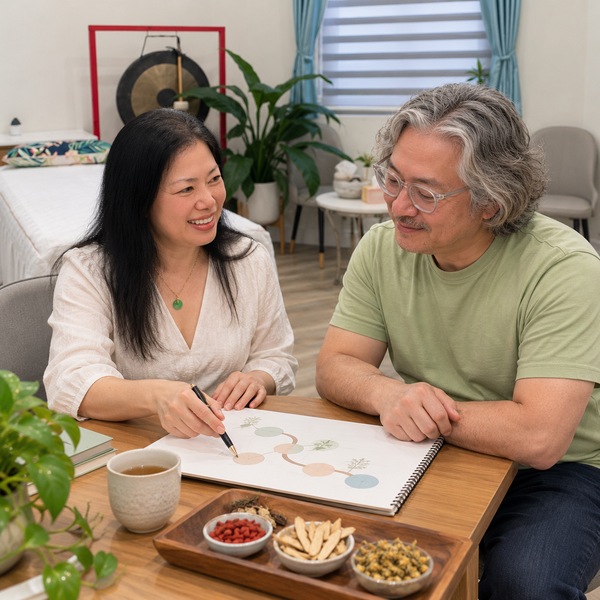
The Lane Cove rooms are at 2 Austin Street, directly opposite the Lane Cove Library and a few metres from Longueville Road. If you are coming from the village it is a walk of two or three minutes, and the parking behind the library is the easiest option in the middle of the day.
Lane Cove sends a particular mix of problems through the door. There are the desk-and-commute necks and low backs from St Leonards and the city, the shoulders and elbows of a suburb that plays a lot of tennis, and the knees and Achilles tendons that come with living on a hillside — the stairs down to Tambourine Bay and the streets off Burns Bay Road are their own kind of training load. Lane Cove also has a lot of people in their thirties and forties carrying small children, which is its own demand on a back.
A first appointment is mostly questions and movement testing: where the pain is, what makes it worse, what it stops you doing, and how it has behaved over weeks rather than days. From there you should leave knowing what is proposed, roughly how long it is expected to take, and what would mean changing the plan.
Worth bringing: any imaging or specialist letters you already have, a list of medications, and the shoes you actually walk or train in. If the pain is new and severe, follows a significant fall, or comes with numbness, weakness, fever or any change in bladder or bowel control, see a doctor first — that is a medical assessment, not a treatment question.
The nearest alternative if Lane Cove does not suit you is the Freshwater side, about 14 kilometres away across the Spit.

Hijama generally refers to wet cupping, which breaks the skin. If you are reading about it for aches and pains, careful questions come first.
Hijama is a term many people encounter through family, community or online articles, often in connection with aches, pains and general wellbeing. Interest in it is common among people who have tried several approaches for stubborn muscle or joint discomfort. It usually refers to wet cupping, which combines suction with small cuts to the skin and therefore involves blood exposure. That makes it quite different from the dry cupping most people picture.
Reading about how hijama is practised in other countries can raise useful questions. But arrangements, rules and standards overseas should not be assumed to describe treatment in Sydney. What happens in a clinic here needs to be explained on its own terms.
If you are considering this specific procedure, ask Dr Christine Shen, Acupuncturist, to explain the method step by step, its purpose for you and the additional infection-control and aftercare requirements. Ask how the skin is prepared, what equipment is single use, and how wounds should be looked after at home.
Include all medicines in the conversation, especially blood thinners, as well as any history of bleeding problems, anaemia, diabetes, slow wound healing or fainting. Older adults and anyone with fragile skin should raise this early. These details may mean a skin-breaking procedure is not appropriate.
A traditional name should never hide what will physically happen during a session. You should understand the procedure, the risks and the alternatives before agreeing. At follow-up, discuss your goal, your comfort and how the skin has healed. If pain persists, keep your GP involved.
When you raise hijama at the Lane Cove clinic, it is perfectly reasonable to ask Christine whether she offers this procedure at all and, if so, to have every stage described before you make any decision.
Copyright© 2002-2026 visuallink© SaaS - Web Hosted Solutions, Design and Maintenance by Visual Link IT Pty Ltd - Software Solutions

Please Login or Sign up to be able to comment