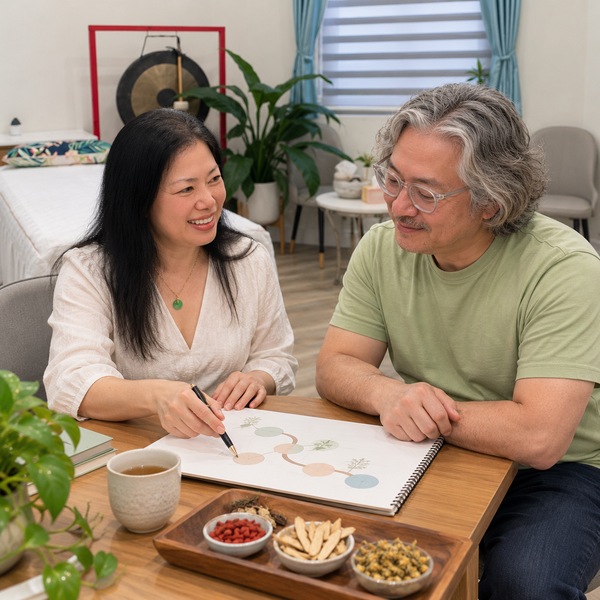
The Lane Cove rooms are at 2 Austin Street, directly opposite the Lane Cove Library and a few metres from Longueville Road. If you are coming from the village it is a walk of two or three minutes, and the parking behind the library is the easiest option in the middle of the day.
Lane Cove sends a particular mix of problems through the door. There are the desk-and-commute necks and low backs from St Leonards and the city, the shoulders and elbows of a suburb that plays a lot of tennis, and the knees and Achilles tendons that come with living on a hillside — the stairs down to Tambourine Bay and the streets off Burns Bay Road are their own kind of training load. Lane Cove also has a lot of people in their thirties and forties carrying small children, which is its own demand on a back.
A first appointment is mostly questions and movement testing: where the pain is, what makes it worse, what it stops you doing, and how it has behaved over weeks rather than days. From there you should leave knowing what is proposed, roughly how long it is expected to take, and what would mean changing the plan.
Worth bringing: any imaging or specialist letters you already have, a list of medications, and the shoes you actually walk or train in. If the pain is new and severe, follows a significant fall, or comes with numbness, weakness, fever or any change in bladder or bowel control, see a doctor first — that is a medical assessment, not a treatment question.
The nearest alternative if Lane Cove does not suit you is the Freshwater side, about 14 kilometres away across the Spit.

Stress often settles in the body as tight shoulders, headaches and poor sleep. Some people use acupuncture as a relaxing complement to their medical care when everyday tension builds up.
Stress is not only in the mind. Many people carry it as stiff necks, tension headaches, a tight jaw or restless sleep. Over time, ongoing stress may also be associated with fatigue and digestive upsets. Anxiety can add a pounding heart, chest tightness and a mind that will not switch off at night. Because these symptoms can have many causes, it is important to have them assessed by your GP.
When we feel under threat, the body moves into a "fight-or-flight" state. Muscles tense, breathing quickens and sleep becomes lighter. The opposite state, often called "rest-and-digest", is when the body settles. Researchers are investigating whether acupuncture can influence the shift between these states and stress hormones such as cortisol, but the evidence is mixed and still evolving.
In TCM theory, stress is traditionally described as stuck Qi, often linked with the Liver system, which is thought to show up as tension in the neck, shoulders and sides of the head. This is a traditional idea, not a medical explanation, yet it is why practitioners often choose points that relate to these areas.
Many people say a session gives them a rare chance to stop, lie down and breathe slowly. Some notice they feel more relaxed afterwards. Experiences vary, and we do not claim acupuncture removes tension or improves sleep.
Our practitioners offer calm, unhurried acupuncture sessions for people who want a relaxing addition to their routine. Please keep your GP involved, especially if stress, anxiety or sleep problems are affecting your daily life.
Copyright© 2002-2026 visuallink© SaaS - Web Hosted Solutions, Design and Maintenance by Visual Link IT Pty Ltd - Software Solutions

Please Login or Sign up to be able to comment