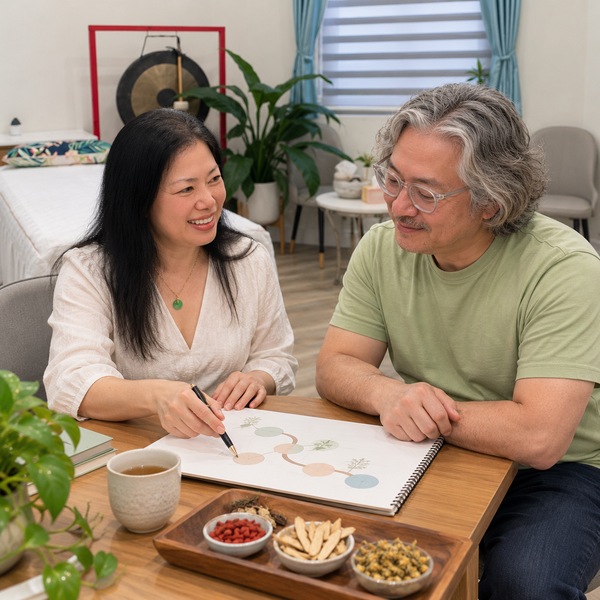
The Lane Cove rooms are at 2 Austin Street, directly opposite the Lane Cove Library and a few metres from Longueville Road. If you are coming from the village it is a walk of two or three minutes, and the parking behind the library is the easiest option in the middle of the day.
Lane Cove sends a particular mix of problems through the door. There are the desk-and-commute necks and low backs from St Leonards and the city, the shoulders and elbows of a suburb that plays a lot of tennis, and the knees and Achilles tendons that come with living on a hillside — the stairs down to Tambourine Bay and the streets off Burns Bay Road are their own kind of training load. Lane Cove also has a lot of people in their thirties and forties carrying small children, which is its own demand on a back.
A first appointment is mostly questions and movement testing: where the pain is, what makes it worse, what it stops you doing, and how it has behaved over weeks rather than days. From there you should leave knowing what is proposed, roughly how long it is expected to take, and what would mean changing the plan.
Worth bringing: any imaging or specialist letters you already have, a list of medications, and the shoes you actually walk or train in. If the pain is new and severe, follows a significant fall, or comes with numbness, weakness, fever or any change in bladder or bowel control, see a doctor first — that is a medical assessment, not a treatment question.
The nearest alternative if Lane Cove does not suit you is the Freshwater side, about 14 kilometres away across the Spit.

Articles about moxibustion, cupping and other external techniques can make a combined session sound more complete. More components only make sense when each has a clear purpose.
Some clinic brochures and articles describe sessions that bundle moxibustion, cupping, gua sha and acupuncture into a single visit. For someone frustrated by a stubborn sore back, that can sound thorough, as if more techniques must mean more chance of feeling better. A list of what is available, though, does not establish that you need several approaches at once.
A coherent plan makes the purpose of each part understandable. If a session includes moxa and cupping, you should be able to say why each one is there and what it is expected to add. Using more procedures simply because they are on offer can lengthen a visit, add to skin recovery time and make it harder to tell what is actually helping.
When you see Dr Christine Shen, Acupuncturist, at the Freshwater clinic, ask:
Share your own preferences too. Time constraints, how much hands-on treatment you enjoy, sensitivity to heat or smoke, and how quickly your skin usually recovers are all relevant alongside your symptoms.
If moxibustion is part of the mix, discuss how you will tell Christine when warmth feels excessive and what aftercare you will need at home. Mention reduced sensation, fragile skin or breathing sensitivity. Keep the agreed instructions personal; a combination that suited a friend reflects their needs, not yours.
Simplicity has its own advantages. A plan with fewer, well-chosen parts can be easier to follow, easier to evaluate and easier on your skin, and you can always add something later if there is a clear reason to do so.
Copyright© 2002-2026 visuallink© SaaS - Web Hosted Solutions, Design and Maintenance by Visual Link IT Pty Ltd - Software Solutions

Please Login or Sign up to be able to comment