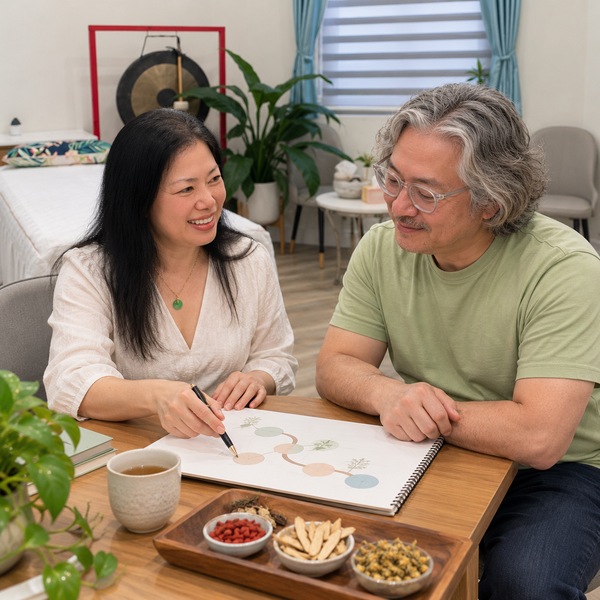
The Lane Cove rooms are at 2 Austin Street, directly opposite the Lane Cove Library and a few metres from Longueville Road. If you are coming from the village it is a walk of two or three minutes, and the parking behind the library is the easiest option in the middle of the day.
Lane Cove sends a particular mix of problems through the door. There are the desk-and-commute necks and low backs from St Leonards and the city, the shoulders and elbows of a suburb that plays a lot of tennis, and the knees and Achilles tendons that come with living on a hillside — the stairs down to Tambourine Bay and the streets off Burns Bay Road are their own kind of training load. Lane Cove also has a lot of people in their thirties and forties carrying small children, which is its own demand on a back.
A first appointment is mostly questions and movement testing: where the pain is, what makes it worse, what it stops you doing, and how it has behaved over weeks rather than days. From there you should leave knowing what is proposed, roughly how long it is expected to take, and what would mean changing the plan.
Worth bringing: any imaging or specialist letters you already have, a list of medications, and the shoes you actually walk or train in. If the pain is new and severe, follows a significant fall, or comes with numbness, weakness, fever or any change in bladder or bowel control, see a doctor first — that is a medical assessment, not a treatment question.
The nearest alternative if Lane Cove does not suit you is the Freshwater side, about 14 kilometres away across the Spit.

A sore, stiff neck can make driving, working and sleeping harder. Practical comfort tips for everyday life, and when to seek help, from Pain Relief Sydney in Lane Cove and Freshwater.
A sore neck has a way of creeping into every part of the day. Checking your blind spot while driving, reading emails or settling down to sleep can all feel awkward. At Pain Relief Sydney, our practitioners in Lane Cove and Freshwater regularly meet people dealing with this kind of everyday discomfort, so we have gathered some practical ideas for getting through the day more comfortably.
A warm shower directed at the back of the neck is a gentle way to start for many people. Take your time getting up rather than jerking your head off the pillow.
Lift your screen to eye level, keep your phone higher, and get up to move regularly. Sitting directly under cold air conditioning may make muscles feel tighter, so a light scarf can help you stay comfortable.
Adjust your seat and headrest before setting off, and use your mirrors well. If turning your head is difficult, consider whether it is safe to drive at all.
Choose a pillow that keeps your neck in a neutral line. Some people find a heat pack before bed soothing, while others prefer a cold pack wrapped in a cloth for a short time. Never fall asleep on a heat pack.
Gentle movement is usually better than keeping the neck rigid. Try these slowly and stop if pain increases:
In Traditional Chinese Medicine theory, discomfort is linked to blocked flow of Qi in the meridians, sometimes due to cold. Some people choose acupuncture or herbal medicine to support their comfort and wellbeing, as part of a plan that includes their GP. Evidence for these therapies is mixed and research is ongoing.
Your pain follows an accident or fall, is severe or getting worse, lasts more than a few days, or comes with headache, fever, dizziness, numbness, tingling or weakness. In these cases please see your GP promptly.
Copyright© 2002-2026 visuallink© SaaS - Web Hosted Solutions, Design and Maintenance by Visual Link IT Pty Ltd - Software Solutions

Please Login or Sign up to be able to comment