The Lane Cove rooms are at 2 Austin Street, directly opposite the Lane Cove Library and a few metres from Longueville Road. If you are coming from the village it is a walk of two or three minutes, and the parking behind the library is the easiest option in the middle of the day.
Lane Cove sends a particular mix of problems through the door. There are the desk-and-commute necks and low backs from St Leonards and the city, the shoulders and elbows of a suburb that plays a lot of tennis, and the knees and Achilles tendons that come with living on a hillside — the stairs down to Tambourine Bay and the streets off Burns Bay Road are their own kind of training load. Lane Cove also has a lot of people in their thirties and forties carrying small children, which is its own demand on a back.
A first appointment is mostly questions and movement testing: where the pain is, what makes it worse, what it stops you doing, and how it has behaved over weeks rather than days. From there you should leave knowing what is proposed, roughly how long it is expected to take, and what would mean changing the plan.
Worth bringing: any imaging or specialist letters you already have, a list of medications, and the shoes you actually walk or train in. If the pain is new and severe, follows a significant fall, or comes with numbness, weakness, fever or any change in bladder or bowel control, see a doctor first — that is a medical assessment, not a treatment question.
The nearest alternative if Lane Cove does not suit you is the Freshwater side, about 14 kilometres away across the Spit.

When pain and frustration keep you awake, a restful sound session can be appealing. Here is how to enjoy it for relaxation while making sure ongoing sleep problems are assessed.
Few things wear a person down like nights spent shifting position to ease a sore hip or shoulder, then watching the clock. When sleep has become frustrating, an hour of gentle sound in a calm room can sound like a welcome break. Some people even drift off during a session.

Falling asleep while bowls hum in the background feels lovely, but it does not show that sound treats insomnia or explain why your nights have become difficult. These sessions are a way to unwind, a wellbeing experience rather than therapy for a condition, and it helps to keep that in mind when deciding what to expect.
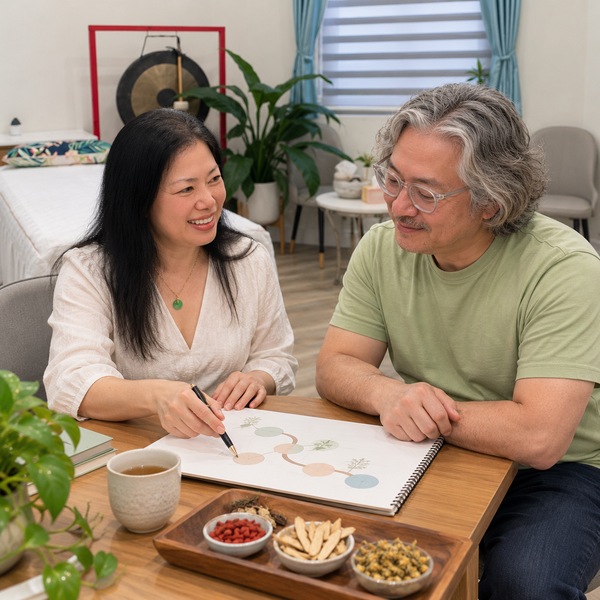
Before a session with Dr Christine Shen, Acupuncturist, at the Lane Cove clinic, share a picture of your sleep:
With that information, you and Christine can talk about whether a sound session is simply a relaxing choice or one part of a wider plan.
Persistent sleep difficulty deserves proper assessment, particularly when it affects safety, work or everyday functioning. Loud snoring, pauses in breathing, or falling asleep at the wheel are reasons to see your GP promptly. Pain that regularly wakes you is worth discussing with your GP too.
If lying flat aggravates your back, ask for a reclining chair or extra support. Volume, distance from the instruments and the option to pause are all adjustable. You do not need to feel any particular way or stay perfectly still.
A calm hour can be a kindness to a tired body. Enjoy it for what it is, and let the bigger question of why sleep has slipped away be explored through the right channels at the same time.
Copyright© 2002-2026 visuallink© SaaS - Web Hosted Solutions, Design and Maintenance by Visual Link IT Pty Ltd - Software Solutions

Please Login or Sign up to be able to comment