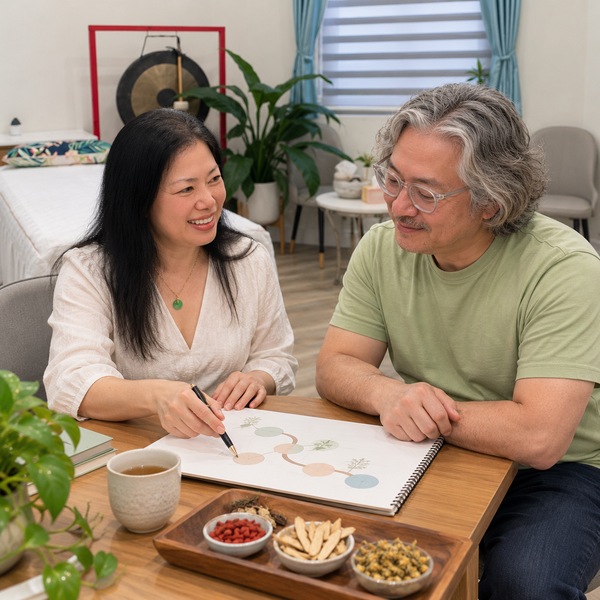
The Lane Cove rooms are at 2 Austin Street, directly opposite the Lane Cove Library and a few metres from Longueville Road. If you are coming from the village it is a walk of two or three minutes, and the parking behind the library is the easiest option in the middle of the day.
Lane Cove sends a particular mix of problems through the door. There are the desk-and-commute necks and low backs from St Leonards and the city, the shoulders and elbows of a suburb that plays a lot of tennis, and the knees and Achilles tendons that come with living on a hillside — the stairs down to Tambourine Bay and the streets off Burns Bay Road are their own kind of training load. Lane Cove also has a lot of people in their thirties and forties carrying small children, which is its own demand on a back.
A first appointment is mostly questions and movement testing: where the pain is, what makes it worse, what it stops you doing, and how it has behaved over weeks rather than days. From there you should leave knowing what is proposed, roughly how long it is expected to take, and what would mean changing the plan.
Worth bringing: any imaging or specialist letters you already have, a list of medications, and the shoes you actually walk or train in. If the pain is new and severe, follows a significant fall, or comes with numbness, weakness, fever or any change in bladder or bowel control, see a doctor first — that is a medical assessment, not a treatment question.
The nearest alternative if Lane Cove does not suit you is the Freshwater side, about 14 kilometres away across the Spit.

Wanting psychological support and actually arranging it are two different things, especially when pain saps your energy. Naming the obstacle can help.
For people managing daily pain, energy is a limited resource. Even when you know talking to someone could help, organising it can slip down the list. Worries about cost, finding a time that fits around work or medical appointments, language, and not knowing how to start the conversation can all hold things up.
It often helps to pin down exactly what is stopping you. Is it the fee, the travel, the thought of sitting still for an hour with a sore back, or uncertainty about what to say? Once the barrier is clear, it is easier to look for a way around it. A practical problem usually has a practical answer.

When contacting the clinic about sessions with Dr Christine Shen, Acupuncturist, who holds qualifications in psychotherapy, you can ask about fees, available times, session format and any arrangements that would make attending easier for you. If sitting in one position is uncomfortable, mention it; being able to stand or shift during a session is a reasonable request. Knowing these details upfront removes some of the guesswork.
If explaining everything feels overwhelming, write down one concern you would like to start with. That is enough. You do not need to commit to a long series of sessions before you have even met. Your priorities can guide the direction, including what you want to understand and what feels hard to change. It is fair to ask Christine how often you will check in on progress together, and what happens if life changes between sessions.
For anyone near the lower North Shore, psychotherapy with Christine is available at the Lane Cove clinic. A brief phone call or message to ask your practical questions first can be a low-pressure way to take that initial step, without having to decide anything else straight away.
Copyright© 2002-2026 visuallink© SaaS - Web Hosted Solutions, Design and Maintenance by Visual Link IT Pty Ltd - Software Solutions

Please Login or Sign up to be able to comment