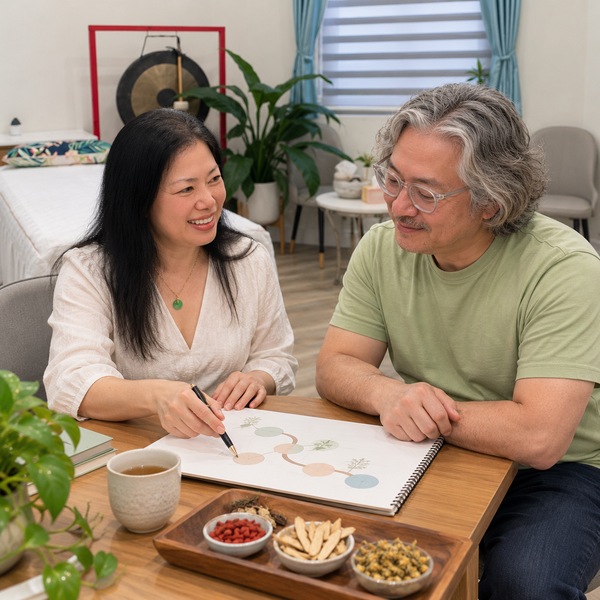
The Lane Cove rooms are at 2 Austin Street, directly opposite the Lane Cove Library and a few metres from Longueville Road. If you are coming from the village it is a walk of two or three minutes, and the parking behind the library is the easiest option in the middle of the day.
Lane Cove sends a particular mix of problems through the door. There are the desk-and-commute necks and low backs from St Leonards and the city, the shoulders and elbows of a suburb that plays a lot of tennis, and the knees and Achilles tendons that come with living on a hillside — the stairs down to Tambourine Bay and the streets off Burns Bay Road are their own kind of training load. Lane Cove also has a lot of people in their thirties and forties carrying small children, which is its own demand on a back.
A first appointment is mostly questions and movement testing: where the pain is, what makes it worse, what it stops you doing, and how it has behaved over weeks rather than days. From there you should leave knowing what is proposed, roughly how long it is expected to take, and what would mean changing the plan.
Worth bringing: any imaging or specialist letters you already have, a list of medications, and the shoes you actually walk or train in. If the pain is new and severe, follows a significant fall, or comes with numbness, weakness, fever or any change in bladder or bowel control, see a doctor first — that is a medical assessment, not a treatment question.
The nearest alternative if Lane Cove does not suit you is the Freshwater side, about 14 kilometres away across the Spit.

Gua sha has a long association with summer, but heat illness needs medical care first. Here is how to judge the situation and what to mention at a non-urgent visit.
Sydney summers can leave people drained, headachy and sore, especially older adults, outdoor workers and anyone pushing through a run in the afternoon heat. In traditional Chinese practice, gua sha has long been linked with summer discomfort. That history is interesting, but it should never distract from the more pressing question of how unwell someone actually is.
Dizziness, confusion, vomiting, a very high temperature, fainting or symptoms that keep getting worse need medical attention, not a scraping tool. If you or someone near you seems seriously affected by heat, call emergency services or see a doctor promptly. A traditional seasonal remedy is no substitute for that assessment.
When the discomfort is mild and you are otherwise well, you might book a consultation with Dr Christine Shen, Acupuncturist, at the Lane Cove clinic. It helps to explain:
The first decision is what kind of care suits your situation. The technique most associated with the season may or may not be part of that answer.
If gua sha is used, mention any tenderness, irritation or unexpected bruising before another session. Tools and pressure should suit your skin and circumstances, rather than chasing a particular shade of red seen in a photo. Christine can then go ahead, adjust the approach or suggest something else.
On hot days, the simple steps still matter most: shade, fluids, rest and a sensible pace for walking, gardening or training. Keep those in place, learn the warning signs, and regard any traditional technique as a possible extra for a well person rather than an answer for a struggling one.
Copyright© 2002-2026 visuallink© SaaS - Web Hosted Solutions, Design and Maintenance by Visual Link IT Pty Ltd - Software Solutions

Please Login or Sign up to be able to comment