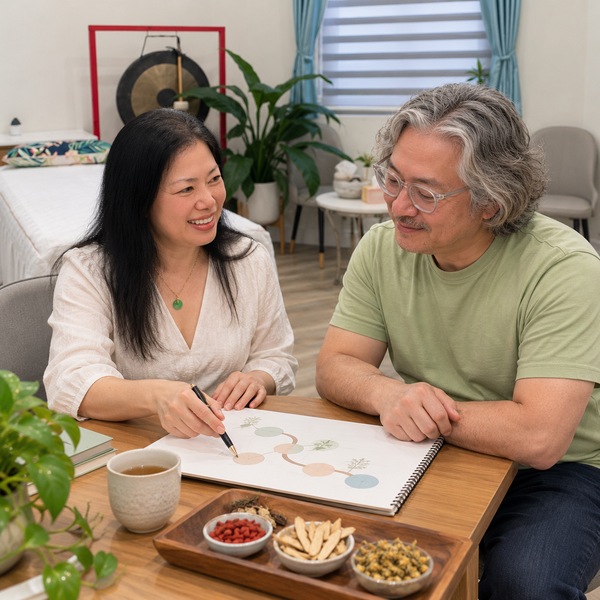
The Lane Cove rooms are at 2 Austin Street, directly opposite the Lane Cove Library and a few metres from Longueville Road. If you are coming from the village it is a walk of two or three minutes, and the parking behind the library is the easiest option in the middle of the day.
Lane Cove sends a particular mix of problems through the door. There are the desk-and-commute necks and low backs from St Leonards and the city, the shoulders and elbows of a suburb that plays a lot of tennis, and the knees and Achilles tendons that come with living on a hillside — the stairs down to Tambourine Bay and the streets off Burns Bay Road are their own kind of training load. Lane Cove also has a lot of people in their thirties and forties carrying small children, which is its own demand on a back.
A first appointment is mostly questions and movement testing: where the pain is, what makes it worse, what it stops you doing, and how it has behaved over weeks rather than days. From there you should leave knowing what is proposed, roughly how long it is expected to take, and what would mean changing the plan.
Worth bringing: any imaging or specialist letters you already have, a list of medications, and the shoes you actually walk or train in. If the pain is new and severe, follows a significant fall, or comes with numbness, weakness, fever or any change in bladder or bowel control, see a doctor first — that is a medical assessment, not a treatment question.
The nearest alternative if Lane Cove does not suit you is the Freshwater side, about 14 kilometres away across the Spit.

Acupuncture knowledge has travelled through families, teachers and communities for generations. Those stories offer cultural context, while your appointment needs its own assessment.
Acupuncture has often been handed down through families, from teacher to student, and through community clinics that served neighbours for decades. Stories of a grandparent treating villagers, or a practitioner devoting a career to people who could not afford care elsewhere, show the human relationships woven through the tradition. They can be moving to read, especially if your own family has roots in Chinese medicine.
A lineage story tells us how knowledge travelled and what people valued. It cannot predict what acupuncture will do today for one person with a sore lower back or arthritic knees. Respecting the history and asking practical questions about your care can happen side by side.
An interest in heritage can be a lovely starting point for conversation. When you meet Dr Christine Shen, Acupuncturist, at the Lane Cove clinic, you might ask how she explains her approach and how traditional ideas inform her reasoning. Then bring the focus to your own situation:
Cultural history provides context, but each visit still requires assessment, your consent and regular review. Christine will want to know about your health history, medicines and how pain affects your days, regardless of how long the tradition behind the needles stretches back.
Separating what bothers you from what you hope to achieve keeps the plan grounded. Your goal might be moving through the garden with less stiffness, understanding your back pain more clearly, or learning when a different kind of care is needed.
Stories of inheritance remind us that acupuncture has always been about people caring for people. Bringing that spirit into a modern consultation means pairing respect for the past with clear communication in the present.
Copyright© 2002-2026 visuallink© SaaS - Web Hosted Solutions, Design and Maintenance by Visual Link IT Pty Ltd - Software Solutions

Please Login or Sign up to be able to comment