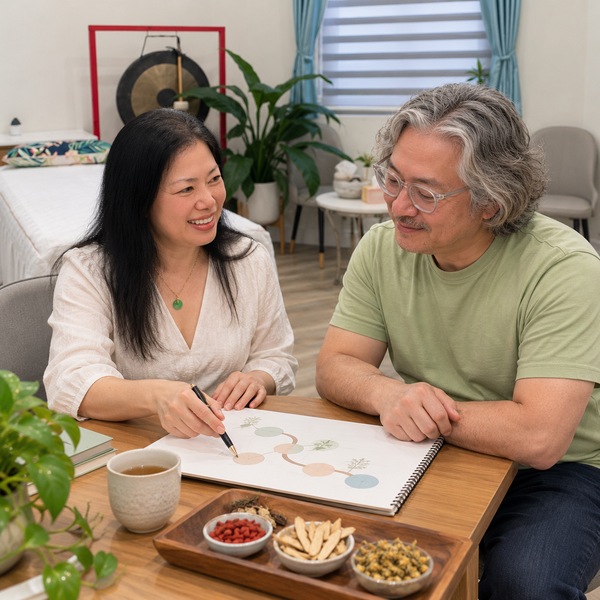
The Lane Cove rooms are at 2 Austin Street, directly opposite the Lane Cove Library and a few metres from Longueville Road. If you are coming from the village it is a walk of two or three minutes, and the parking behind the library is the easiest option in the middle of the day.
Lane Cove sends a particular mix of problems through the door. There are the desk-and-commute necks and low backs from St Leonards and the city, the shoulders and elbows of a suburb that plays a lot of tennis, and the knees and Achilles tendons that come with living on a hillside — the stairs down to Tambourine Bay and the streets off Burns Bay Road are their own kind of training load. Lane Cove also has a lot of people in their thirties and forties carrying small children, which is its own demand on a back.
A first appointment is mostly questions and movement testing: where the pain is, what makes it worse, what it stops you doing, and how it has behaved over weeks rather than days. From there you should leave knowing what is proposed, roughly how long it is expected to take, and what would mean changing the plan.
Worth bringing: any imaging or specialist letters you already have, a list of medications, and the shoes you actually walk or train in. If the pain is new and severe, follows a significant fall, or comes with numbness, weakness, fever or any change in bladder or bowel control, see a doctor first — that is a medical assessment, not a treatment question.
The nearest alternative if Lane Cove does not suit you is the Freshwater side, about 14 kilometres away across the Spit.

Ongoing pelvic pain from endometriosis can wear people down. Alongside medical treatment, some find comfort in self-care habits and in relaxing therapies such as acupuncture.
For many people with endometriosis, pain is not a one-off event. It can arrive before and during periods, flare up at other times, and affect sleep, energy and mood. Endometriosis involves tissue similar to the uterine lining growing outside the uterus, and it may also be connected with fertility difficulties. Because pain like this deserves proper investigation, a GP and gynaecologist should always be your first port of call.
These ideas will not change the condition, but some people find them comforting on difficult days:
Always follow your doctor's advice on medication and other treatment.
Acupuncture is one complementary option some people with endometriosis explore. Within traditional Chinese medicine, menstrual pain is often explained as Qi and Blood not moving freely in the lower abdomen. That is a traditional theory, not a medical finding.
Many people say they appreciate sessions as a calm, quiet time that helps them feel more relaxed. Scientists have investigated acupuncture for period pain and its possible links with the body's endorphins, but the evidence is mixed and research continues. We do not claim acupuncture reduces pain from endometriosis.
Chinese herbal medicine is traditionally used alongside acupuncture, with formulas tailored to each person. Let your doctor know about any herbs, because some interact with medicines.
A simple diary of pain, cycle and sleep can help you and your doctor see patterns and make decisions together.
If you would like relaxation-focused care alongside your medical treatment, our practitioners can talk through whether acupuncture suits you. Seek medical advice promptly about any new or worsening pain.
Copyright© 2002-2026 visuallink© SaaS - Web Hosted Solutions, Design and Maintenance by Visual Link IT Pty Ltd - Software Solutions

Please Login or Sign up to be able to comment