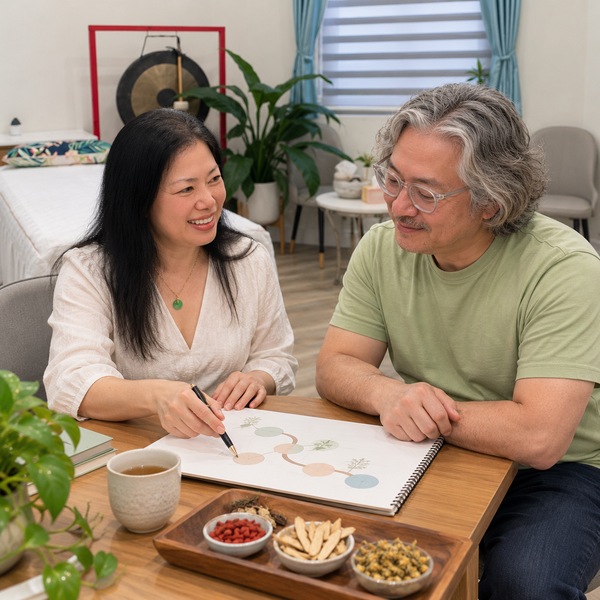
The Lane Cove rooms are at 2 Austin Street, directly opposite the Lane Cove Library and a few metres from Longueville Road. If you are coming from the village it is a walk of two or three minutes, and the parking behind the library is the easiest option in the middle of the day.
Lane Cove sends a particular mix of problems through the door. There are the desk-and-commute necks and low backs from St Leonards and the city, the shoulders and elbows of a suburb that plays a lot of tennis, and the knees and Achilles tendons that come with living on a hillside — the stairs down to Tambourine Bay and the streets off Burns Bay Road are their own kind of training load. Lane Cove also has a lot of people in their thirties and forties carrying small children, which is its own demand on a back.
A first appointment is mostly questions and movement testing: where the pain is, what makes it worse, what it stops you doing, and how it has behaved over weeks rather than days. From there you should leave knowing what is proposed, roughly how long it is expected to take, and what would mean changing the plan.
Worth bringing: any imaging or specialist letters you already have, a list of medications, and the shoes you actually walk or train in. If the pain is new and severe, follows a significant fall, or comes with numbness, weakness, fever or any change in bladder or bowel control, see a doctor first — that is a medical assessment, not a treatment question.
The nearest alternative if Lane Cove does not suit you is the Freshwater side, about 14 kilometres away across the Spit.

Warmth can sound appealing when joints feel stiff, but moxibustion involves real heat and smoke. Comfort and safety need to be discussed first.
On a cold morning, stiff hands or a creaky knee can make warmth sound very appealing. Moxibustion uses heat produced by moxa, a material usually made from dried mugwort. People sometimes picture a gentle heat pack, but the experience is different. Because it involves real heat and some smoke, it deserves a short conversation about comfort and suitability before anything is lit.
Tell Dr Christine Shen, Acupuncturist, if you have asthma, react to smoke or strong scents, have sensitive or thinning skin, or have reduced feeling in an area. Reduced sensation is especially relevant for some older adults and for people with conditions such as diabetes, because heat that seems mild may not register properly. These details can make moxibustion uncomfortable or unsuitable.

There is no benefit in toughing out warmth that feels too strong. Say so immediately if a spot becomes hot or if smoke stings your eyes or catches in your throat. Traditional descriptions talk about warming and regulating the body; these describe a framework for treatment within Chinese medicine, not a promise of a particular result for your joint.

Before heat is applied, settle on a simple way to signal discomfort, such as raising a hand or just saying stop. Ask what aftercare you will need and what skin changes would be worth reporting. Keep any instructions personal: a video routine or a friend's experience with moxa does not tell you what is appropriate for your skin, breathing or circulation. If a small blister, lasting redness or unusual soreness appears afterwards, report it rather than waiting to see whether it settles on its own.
Moxa is one of several warming options Christine may discuss at the Lane Cove clinic. If you have any doubt about smoke or heat sensitivity, raise it when booking so there is time to talk it through, and so another option can be considered if moxa is not a good match for you.
Copyright© 2002-2026 visuallink© SaaS - Web Hosted Solutions, Design and Maintenance by Visual Link IT Pty Ltd - Software Solutions

Please Login or Sign up to be able to comment