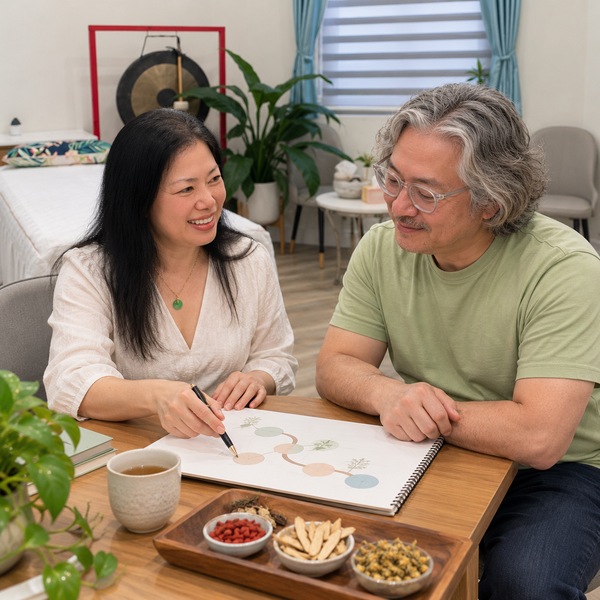
The Lane Cove rooms are at 2 Austin Street, directly opposite the Lane Cove Library and a few metres from Longueville Road. If you are coming from the village it is a walk of two or three minutes, and the parking behind the library is the easiest option in the middle of the day.
Lane Cove sends a particular mix of problems through the door. There are the desk-and-commute necks and low backs from St Leonards and the city, the shoulders and elbows of a suburb that plays a lot of tennis, and the knees and Achilles tendons that come with living on a hillside — the stairs down to Tambourine Bay and the streets off Burns Bay Road are their own kind of training load. Lane Cove also has a lot of people in their thirties and forties carrying small children, which is its own demand on a back.
A first appointment is mostly questions and movement testing: where the pain is, what makes it worse, what it stops you doing, and how it has behaved over weeks rather than days. From there you should leave knowing what is proposed, roughly how long it is expected to take, and what would mean changing the plan.
Worth bringing: any imaging or specialist letters you already have, a list of medications, and the shoes you actually walk or train in. If the pain is new and severe, follows a significant fall, or comes with numbness, weakness, fever or any change in bladder or bowel control, see a doctor first — that is a medical assessment, not a treatment question.
The nearest alternative if Lane Cove does not suit you is the Freshwater side, about 14 kilometres away across the Spit.

Gua sha can mean a light facial routine or firmer scraping on sore muscles. Knowing which one you are asking about makes the conversation clearer.
If you have seen gua sha stones sold for facial routines and also heard about gua sha for tight shoulders, it is fair to be confused. The same name covers gentle facial techniques and much firmer scraping on the body. They involve different pressure, different areas and different goals, and should not be treated as the same procedure.

Facial gua sha is usually light and slow, often promoted as part of a relaxation or skincare ritual. Body gua sha, used traditionally on areas such as the back, neck and shoulders, typically involves more pressure and can leave visible marks. Knowing which one you are interested in helps set realistic expectations.
When speaking with Dr Christine Shen, Acupuncturist, explain which type of gua sha you mean and what you hope to get from it. If your interest is in stiff shoulders from desk work or aching muscles after exercise, say so. Ask about skin suitability, how pressure will be chosen and what aftercare is needed. Mention medicines that make you bruise easily or any skin sensitivity.
A popular tool does not mean a technique is suitable in every situation. A rash, broken skin, a recent injury or symptoms nobody has explained yet call for caution and often a medical review first. Your GP should assess anything new, unusual or worsening.
Before any repeat session, report soreness, irritation or bruising that lasted longer than expected. The tool and technique should match your skin and circumstances, not a social-media picture. Christine can then discuss going ahead, adjusting or choosing a different option.
If you already own a gua sha stone, bring it to the Lane Cove clinic. Christine can explain whether it is designed for facial or body use and talk through how it would or would not fit with what you are hoping for.
Copyright© 2002-2026 visuallink© SaaS - Web Hosted Solutions, Design and Maintenance by Visual Link IT Pty Ltd - Software Solutions

Please Login or Sign up to be able to comment