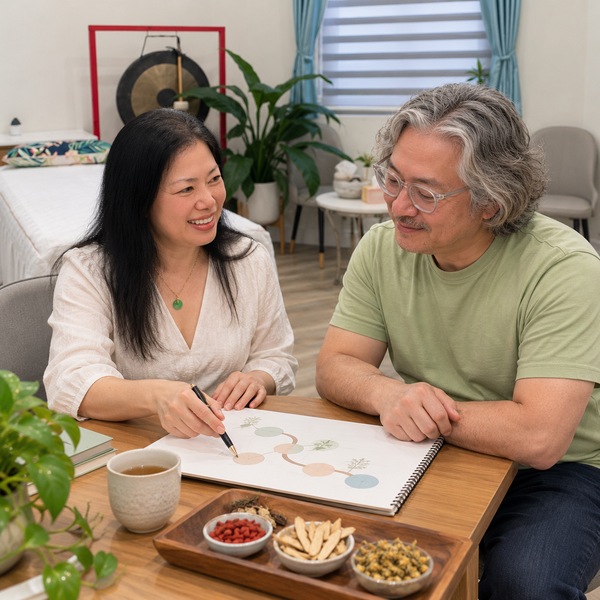
The Lane Cove rooms are at 2 Austin Street, directly opposite the Lane Cove Library and a few metres from Longueville Road. If you are coming from the village it is a walk of two or three minutes, and the parking behind the library is the easiest option in the middle of the day.
Lane Cove sends a particular mix of problems through the door. There are the desk-and-commute necks and low backs from St Leonards and the city, the shoulders and elbows of a suburb that plays a lot of tennis, and the knees and Achilles tendons that come with living on a hillside — the stairs down to Tambourine Bay and the streets off Burns Bay Road are their own kind of training load. Lane Cove also has a lot of people in their thirties and forties carrying small children, which is its own demand on a back.
A first appointment is mostly questions and movement testing: where the pain is, what makes it worse, what it stops you doing, and how it has behaved over weeks rather than days. From there you should leave knowing what is proposed, roughly how long it is expected to take, and what would mean changing the plan.
Worth bringing: any imaging or specialist letters you already have, a list of medications, and the shoes you actually walk or train in. If the pain is new and severe, follows a significant fall, or comes with numbness, weakness, fever or any change in bladder or bowel control, see a doctor first — that is a medical assessment, not a treatment question.
The nearest alternative if Lane Cove does not suit you is the Freshwater side, about 14 kilometres away across the Spit.

When long-term pain affects your mood and relationships, choosing psychological support can feel overwhelming. Fit matters more than knowing every theory.
Living with persistent pain can bring frustration, worry about the future and a sense that others do not understand. When you decide to look for psychological support, the list of therapy styles and acronyms can feel like yet another hurdle. You are not expected to arrive knowing which school of therapy is right.
A good fit is less about the label and more about the experience. Do you feel safe enough to speak honestly? Do the explanations make sense to you? Do the goals reflect what you care about, such as coping on high-pain days or reconnecting with activities you have dropped? These questions are just as important as any theory. Dr Christine Shen, Acupuncturist, holds qualifications in psychotherapy and can explain how her approach would relate to your concerns.

Ask Christine how the proposed psychological work connects with what you have described, and how it might be adapted if parts of it do not suit you. A collaborative relationship leaves space to consider a different method, or a referral to another service, when that would serve you better. Raising this is not a criticism; it is part of making the work useful.
Tell Christine what you hope to make sense of, where you feel stuck and what change might look like on an ordinary day. Perhaps you hope to argue less at home when pain flares, or to plan outings without dread. Ask how and when the approach will be reviewed, and what support exists if your needs shift between sessions. If you have not had your pain assessed recently, keep your GP in the loop as well.
Christine sees psychotherapy clients at the Freshwater clinic. It is fine to use a first meeting simply to get a feel for the conversation and decide afterwards whether you would like to continue.
Copyright© 2002-2026 visuallink© SaaS - Web Hosted Solutions, Design and Maintenance by Visual Link IT Pty Ltd - Software Solutions

Please Login or Sign up to be able to comment