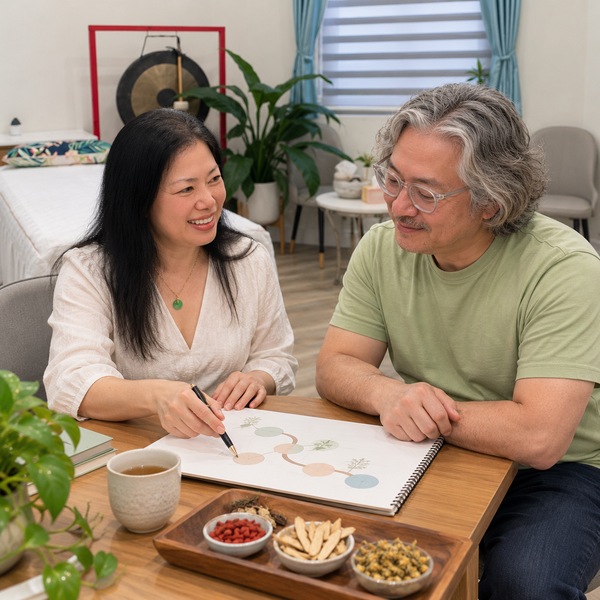
The Lane Cove rooms are at 2 Austin Street, directly opposite the Lane Cove Library and a few metres from Longueville Road. If you are coming from the village it is a walk of two or three minutes, and the parking behind the library is the easiest option in the middle of the day.
Lane Cove sends a particular mix of problems through the door. There are the desk-and-commute necks and low backs from St Leonards and the city, the shoulders and elbows of a suburb that plays a lot of tennis, and the knees and Achilles tendons that come with living on a hillside — the stairs down to Tambourine Bay and the streets off Burns Bay Road are their own kind of training load. Lane Cove also has a lot of people in their thirties and forties carrying small children, which is its own demand on a back.
A first appointment is mostly questions and movement testing: where the pain is, what makes it worse, what it stops you doing, and how it has behaved over weeks rather than days. From there you should leave knowing what is proposed, roughly how long it is expected to take, and what would mean changing the plan.
Worth bringing: any imaging or specialist letters you already have, a list of medications, and the shoes you actually walk or train in. If the pain is new and severe, follows a significant fall, or comes with numbness, weakness, fever or any change in bladder or bowel control, see a doctor first — that is a medical assessment, not a treatment question.
The nearest alternative if Lane Cove does not suit you is the Freshwater side, about 14 kilometres away across the Spit.

Sydney summers are hot and busy. Here is how traditional Chinese medicine links summer with the Fire element and the heart, with practical ideas for staying cool, rested and comfortable.
Sydney summers bring long days, warm nights and a packed social calendar. In traditional Chinese medicine (TCM) theory, summer belongs to the Fire element, which is linked with the heart and its partner organ, the small intestine. Fire's colour is red, its emotion joy, its sound laughter, its sense organ the tongue and its tissue the blood vessels.
When the weather is hot, many people sleep less well and feel more irritable. TCM describes a pattern of excess Fire with a similar picture: restlessness, anxiety, broken sleep, a racing heart, talking a lot, sweating and a short fuse. A deficiency of Fire is described quite differently, as tiredness, low mood, feeling cold, reduced libido and withdrawing from others. These descriptions come from traditional theory; please see your GP about palpitations, chest pain, persistent anxiety or low mood.
Red foods are associated with the heart in TCM food tradition. Watermelon is a summer favourite that is also considered cooling, and tomatoes, cherries and strawberries are easy to enjoy in season. Many of these foods contain antioxidants, and tomatoes and watermelon contain lycopene. Green tea, basil and coriander are other traditional choices.
At our Lane Cove and Freshwater rooms, people living with everyday aches sometimes mention that heat and poor sleep leave them feeling less comfortable. Some choose acupuncture or herbal medicine as part of their self-care, as a complement to the care they receive from their GP. Traditional herbs such as ginseng and reishi are not suitable for everyone and should only be used after professional advice.
Copyright© 2002-2026 visuallink© SaaS - Web Hosted Solutions, Design and Maintenance by Visual Link IT Pty Ltd - Software Solutions

Please Login or Sign up to be able to comment