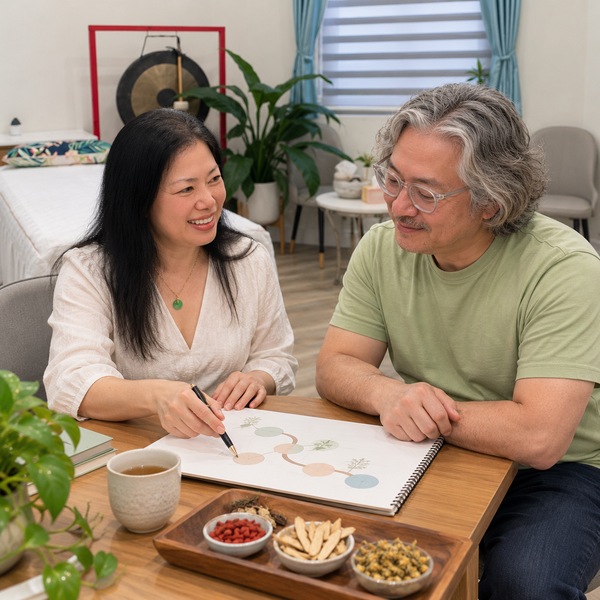
The Lane Cove rooms are at 2 Austin Street, directly opposite the Lane Cove Library and a few metres from Longueville Road. If you are coming from the village it is a walk of two or three minutes, and the parking behind the library is the easiest option in the middle of the day.
Lane Cove sends a particular mix of problems through the door. There are the desk-and-commute necks and low backs from St Leonards and the city, the shoulders and elbows of a suburb that plays a lot of tennis, and the knees and Achilles tendons that come with living on a hillside — the stairs down to Tambourine Bay and the streets off Burns Bay Road are their own kind of training load. Lane Cove also has a lot of people in their thirties and forties carrying small children, which is its own demand on a back.
A first appointment is mostly questions and movement testing: where the pain is, what makes it worse, what it stops you doing, and how it has behaved over weeks rather than days. From there you should leave knowing what is proposed, roughly how long it is expected to take, and what would mean changing the plan.
Worth bringing: any imaging or specialist letters you already have, a list of medications, and the shoes you actually walk or train in. If the pain is new and severe, follows a significant fall, or comes with numbness, weakness, fever or any change in bladder or bowel control, see a doctor first — that is a medical assessment, not a treatment question.
The nearest alternative if Lane Cove does not suit you is the Freshwater side, about 14 kilometres away across the Spit.

Moxibustion is often described with traditional phrases about warmth and qi. This article shows how to translate that language into practical questions about your own session.
Read More →
Everyday nerves are normal, but worry that keeps disrupting sleep, work or movement is worth talking about. Here is how to start, with or without the right words.
Read More →
A gong, a singing bowl and a handpan create very different listening experiences. Here is how to share your preferences and set up a comfortable, relaxing session.
Read More →
Friends may hand you a long list of foods to avoid once you start herbs. This guide helps you ask which dietary notes genuinely apply to your own formula, and why.
Read More →
Raw-herb formulas come with small details that are easy to forget. Here is how to get clear written steps, organise your kitchen and handle a scorched batch calmly.
Read More →
Stories of acupuncture lineages bring history to life. Cultural value is meaningful, but whether a treatment suits you today is a separate question.
Read More →
Classical acupuncture texts describe several ways of organising treatment. Those traditions do not mean two people with the same ache receive identical care.
Read More →
Personal stories of breathing more freely after gua sha can be appealing. New or unexplained breathlessness needs medical attention first.
Read More →
Hijama generally refers to wet cupping, which breaks the skin. If you are reading about it for aches and pains, careful questions come first.
Read More →
A single case study about cupping and fatigue can be interesting, but it cannot forecast your result. Ongoing tiredness deserves proper investigation.
Read More →