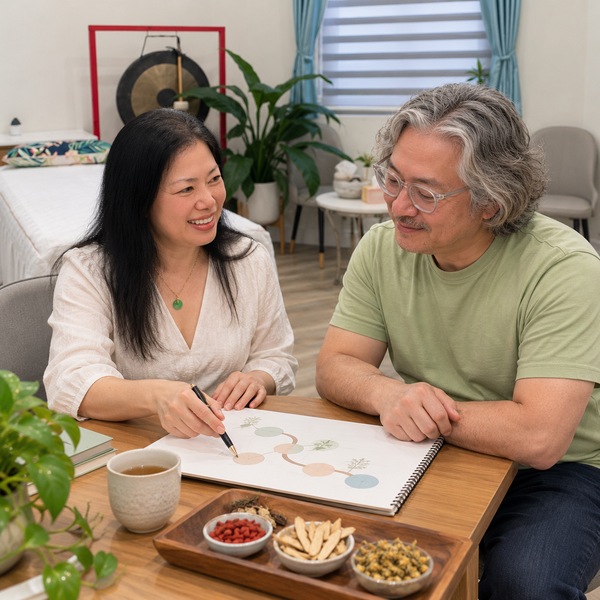
The Lane Cove rooms are at 2 Austin Street, directly opposite the Lane Cove Library and a few metres from Longueville Road. If you are coming from the village it is a walk of two or three minutes, and the parking behind the library is the easiest option in the middle of the day.
Lane Cove sends a particular mix of problems through the door. There are the desk-and-commute necks and low backs from St Leonards and the city, the shoulders and elbows of a suburb that plays a lot of tennis, and the knees and Achilles tendons that come with living on a hillside — the stairs down to Tambourine Bay and the streets off Burns Bay Road are their own kind of training load. Lane Cove also has a lot of people in their thirties and forties carrying small children, which is its own demand on a back.
A first appointment is mostly questions and movement testing: where the pain is, what makes it worse, what it stops you doing, and how it has behaved over weeks rather than days. From there you should leave knowing what is proposed, roughly how long it is expected to take, and what would mean changing the plan.
Worth bringing: any imaging or specialist letters you already have, a list of medications, and the shoes you actually walk or train in. If the pain is new and severe, follows a significant fall, or comes with numbness, weakness, fever or any change in bladder or bowel control, see a doctor first — that is a medical assessment, not a treatment question.
The nearest alternative if Lane Cove does not suit you is the Freshwater side, about 14 kilometres away across the Spit.

Dry and wet cupping share a name but not a procedure. If you are exploring cupping for muscle pain, each deserves its own conversation.
When people talk about trying cupping for a sore back or tight calves, they often mean the dry version they have seen on athletes. Wet cupping is something quite different, and the difference goes well beyond terminology.
Dry cupping applies suction to the skin without intentionally breaking it. Wet cupping adds small punctures or cuts to the skin and therefore involves exposure to blood. That additional step brings separate considerations about infection, bleeding, wound care and recovery. It should never be assumed that agreeing to cupping means agreeing to both.

If a technique that breaks the skin is being discussed, ask about infection control, how bleeding risk is assessed, what aftercare involves and what alternatives exist. Mention blood thinners, diabetes, skin conditions and any history of slow healing. If you have ever felt faint at the sight of blood, say so as well, because it is relevant to the decision. Check with Dr Christine Shen, Acupuncturist, precisely which procedure she is suggesting; the word cupping on its own does not settle that question. Being familiar with dry cupping does not mean you have been told what wet cupping involves.
Whichever method is considered, decide on an everyday task to revisit, like lifting a suitcase into the car or playing a round of golf more comfortably. At follow-up, cover how that task went, along with any tenderness and the state of your skin. Marks are one observation only. Continuing should depend on why you started, how you have responded and what else might help, including assessment by your GP if pain keeps returning.
A quick check at the start of your appointment at the Lane Cove clinic, simply asking which method Christine has in mind and why, takes seconds and gives you the clarity to agree or decline with confidence.
Copyright© 2002-2026 visuallink© SaaS - Web Hosted Solutions, Design and Maintenance by Visual Link IT Pty Ltd - Software Solutions

Please Login or Sign up to be able to comment