The Lane Cove rooms are at 2 Austin Street, directly opposite the Lane Cove Library and a few metres from Longueville Road. If you are coming from the village it is a walk of two or three minutes, and the parking behind the library is the easiest option in the middle of the day.
Lane Cove sends a particular mix of problems through the door. There are the desk-and-commute necks and low backs from St Leonards and the city, the shoulders and elbows of a suburb that plays a lot of tennis, and the knees and Achilles tendons that come with living on a hillside — the stairs down to Tambourine Bay and the streets off Burns Bay Road are their own kind of training load. Lane Cove also has a lot of people in their thirties and forties carrying small children, which is its own demand on a back.
A first appointment is mostly questions and movement testing: where the pain is, what makes it worse, what it stops you doing, and how it has behaved over weeks rather than days. From there you should leave knowing what is proposed, roughly how long it is expected to take, and what would mean changing the plan.
Worth bringing: any imaging or specialist letters you already have, a list of medications, and the shoes you actually walk or train in. If the pain is new and severe, follows a significant fall, or comes with numbness, weakness, fever or any change in bladder or bowel control, see a doctor first — that is a medical assessment, not a treatment question.
The nearest alternative if Lane Cove does not suit you is the Freshwater side, about 14 kilometres away across the Spit.

Humour and storytelling can make mental health easier to talk about. Respectful language helps people seek care without being reduced to a frightening or dismissive stereotype.
Comedians, writers and podcasters have helped many people talk about mental health in ways that once felt impossible. A well-told story or a gentle joke can make an unfamiliar experience feel less isolating. When done well, these conversations invite understanding. At their worst, mental health still gets reduced to stereotypes that frighten or dismiss.
People living with long-term pain sometimes encounter their own version of this. Comments that it is all in their head, or that they are just stressed, can feel belittling. Respectful language matters in both physical and mental health, because it shapes whether people feel safe enough to seek care.
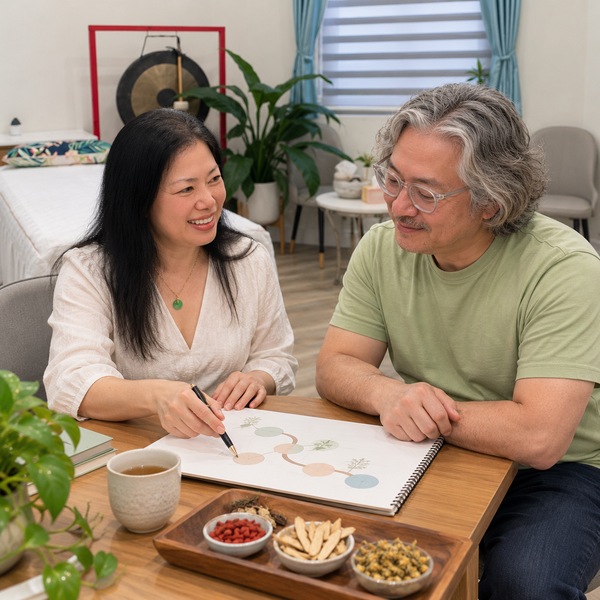
In a conversation with Dr Christine Shen, Acupuncturist, whose background includes psychotherapy training and who works with clients at the Lane Cove clinic, you can describe your experience however feels natural. There is no need for clinical vocabulary. If Christine uses a term you do not recognise, ask what it means. If a label feels confusing or does not fit, say so.
Things you might talk about include:
Clear, kind language should make care easier to reach and discuss. It leaves room for assessment and treatment while honouring your own account of your life.
Your priorities guide where sessions go. Talk with Christine about what you hope to understand, what seems stuck and how you will notice change. Find out how often the plan gets revisited, and where to turn if your circumstances shift.
Every honest conversation about mental health chips away at old stereotypes. Starting yours in your own words, at your own pace, is a meaningful step, however small it may feel at the time.
Copyright© 2002-2026 visuallink© SaaS - Web Hosted Solutions, Design and Maintenance by Visual Link IT Pty Ltd - Software Solutions

Please Login or Sign up to be able to comment