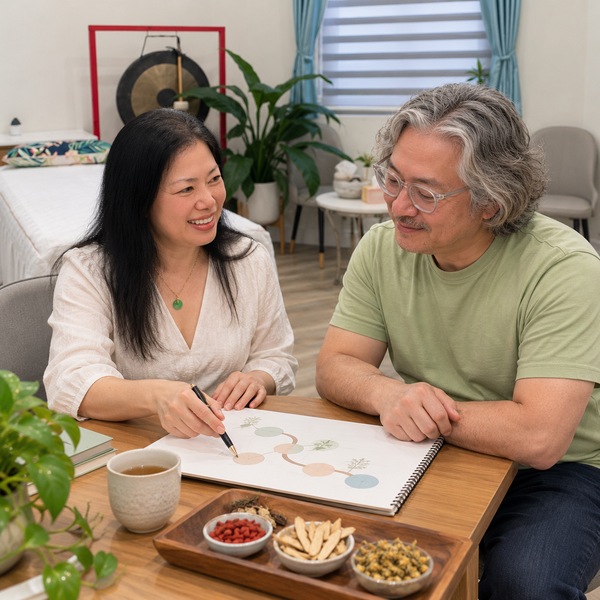
The Lane Cove rooms are at 2 Austin Street, directly opposite the Lane Cove Library and a few metres from Longueville Road. If you are coming from the village it is a walk of two or three minutes, and the parking behind the library is the easiest option in the middle of the day.
Lane Cove sends a particular mix of problems through the door. There are the desk-and-commute necks and low backs from St Leonards and the city, the shoulders and elbows of a suburb that plays a lot of tennis, and the knees and Achilles tendons that come with living on a hillside — the stairs down to Tambourine Bay and the streets off Burns Bay Road are their own kind of training load. Lane Cove also has a lot of people in their thirties and forties carrying small children, which is its own demand on a back.
A first appointment is mostly questions and movement testing: where the pain is, what makes it worse, what it stops you doing, and how it has behaved over weeks rather than days. From there you should leave knowing what is proposed, roughly how long it is expected to take, and what would mean changing the plan.
Worth bringing: any imaging or specialist letters you already have, a list of medications, and the shoes you actually walk or train in. If the pain is new and severe, follows a significant fall, or comes with numbness, weakness, fever or any change in bladder or bowel control, see a doctor first — that is a medical assessment, not a treatment question.
The nearest alternative if Lane Cove does not suit you is the Freshwater side, about 14 kilometres away across the Spit.

A cultural festival can be a friendly introduction to Chinese medicine traditions. Enjoying a demonstration is different from evidence that a therapy suits a diagnosed condition.
Community festivals and cultural days often feature Chinese medicine stalls: someone demonstrating gua sha, a table of singing bowls, perhaps a tea tasting. They are a welcoming way to meet traditions you might not otherwise encounter, and plenty of visitors leave intrigued, especially if they have been looking for new ways to unwind from everyday aches.
Feeling relaxed or interested during a demonstration is a real and pleasant experience. It is not proof that a therapy will help a diagnosed condition such as arthritis or a disc problem. Holding onto that difference keeps curiosity healthy and expectations grounded.
If something at the event sparked your interest, ask Dr Christine Shen, Acupuncturist, at the Freshwater clinic how a treatment session differs from what you saw. In a consultation, several things come into play that a festival stall cannot offer:
Sound sessions, in particular, are offered for relaxation and wellbeing. Christine can explain what a session involves and how it differs from care aimed at an ongoing symptom.
A technique that felt memorable or meaningful at a cultural event does not need to become part of your care. You are free to explore, ask questions and decide it is not for you.
If you do book a sound session, mention how your body copes with lying down, and ask about chairs, cushions, volume and taking breaks. There is no right way to respond and no expectation that you stay perfectly still.
Curiosity sparked at a festival is a wonderful thing. Carried into the clinic with a few good questions, it can lead to an experience you genuinely enjoy, chosen with your eyes open.
Copyright© 2002-2026 visuallink© SaaS - Web Hosted Solutions, Design and Maintenance by Visual Link IT Pty Ltd - Software Solutions

Please Login or Sign up to be able to comment