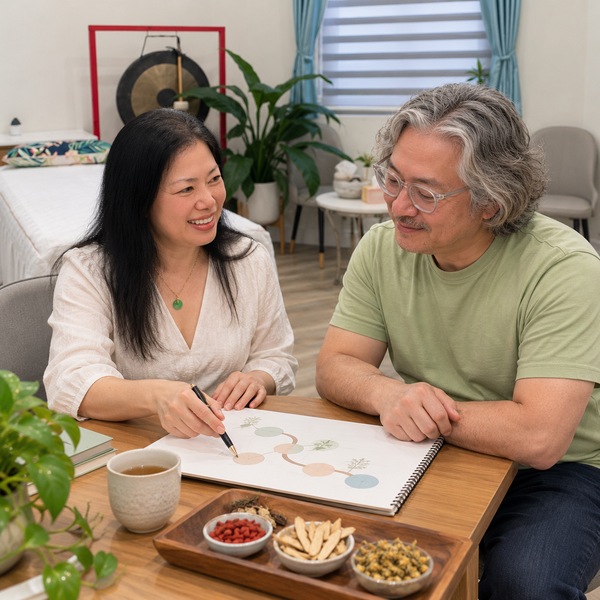
The Lane Cove rooms are at 2 Austin Street, directly opposite the Lane Cove Library and a few metres from Longueville Road. If you are coming from the village it is a walk of two or three minutes, and the parking behind the library is the easiest option in the middle of the day.
Lane Cove sends a particular mix of problems through the door. There are the desk-and-commute necks and low backs from St Leonards and the city, the shoulders and elbows of a suburb that plays a lot of tennis, and the knees and Achilles tendons that come with living on a hillside — the stairs down to Tambourine Bay and the streets off Burns Bay Road are their own kind of training load. Lane Cove also has a lot of people in their thirties and forties carrying small children, which is its own demand on a back.
A first appointment is mostly questions and movement testing: where the pain is, what makes it worse, what it stops you doing, and how it has behaved over weeks rather than days. From there you should leave knowing what is proposed, roughly how long it is expected to take, and what would mean changing the plan.
Worth bringing: any imaging or specialist letters you already have, a list of medications, and the shoes you actually walk or train in. If the pain is new and severe, follows a significant fall, or comes with numbness, weakness, fever or any change in bladder or bowel control, see a doctor first — that is a medical assessment, not a treatment question.
The nearest alternative if Lane Cove does not suit you is the Freshwater side, about 14 kilometres away across the Spit.

A first acupuncture visit for an aching back or neck should leave you clear on the plan. Here is what to raise beforehand and which safety steps you can ask about.
If a sore lower back or a neck that tightens after long days at the keyboard has you considering acupuncture, the first appointment is a chance to understand exactly what is being proposed. You should walk out knowing what the plan is, what it is for and what comes next, rather than guessing.
Start with the ache itself: where it sits, which movements set it off and how it affects work, sleep or exercise. Then add the details that can change whether needling is a sensible choice. Medicines you take, a possible pregnancy, any history of fainting and nervousness about needles all belong in that first conversation. None of these is an inconvenience to raise; together they help Dr Christine Shen, Acupuncturist, judge whether acupuncture suits you at all.

Good practice includes ordinary, visible steps. You can ask how hands are cleaned, whether needles are sterile and used only once, and how every needle is checked off when the session ends. You can also ask to stop partway through. Consent is not a form signed once and forgotten; it continues while you hear about the proposed approach and its alternatives, and it can be revisited whenever you like.

Pain rarely comes with one tidy goal, so it helps to name the symptom separately from the result you would like. For a desk worker, that might be sitting through a meeting with less stiffness. For someone active, it could be getting back to a weekend walk more comfortably. A clearer picture of the problem, or knowing when your GP or physiotherapist should take another look, can be just as worthwhile. Ask Christine how any acupuncture would be reviewed and what would prompt a change of direction.
Appointments with Christine for this kind of pain take place at the Freshwater clinic, and the first one is mostly about listening. A short note of when your pain began, what eases it and what you have already tried will make that first visit quicker and keep it focused on the movements that matter most to you.
Copyright© 2002-2026 visuallink© SaaS - Web Hosted Solutions, Design and Maintenance by Visual Link IT Pty Ltd - Software Solutions

Please Login or Sign up to be able to comment