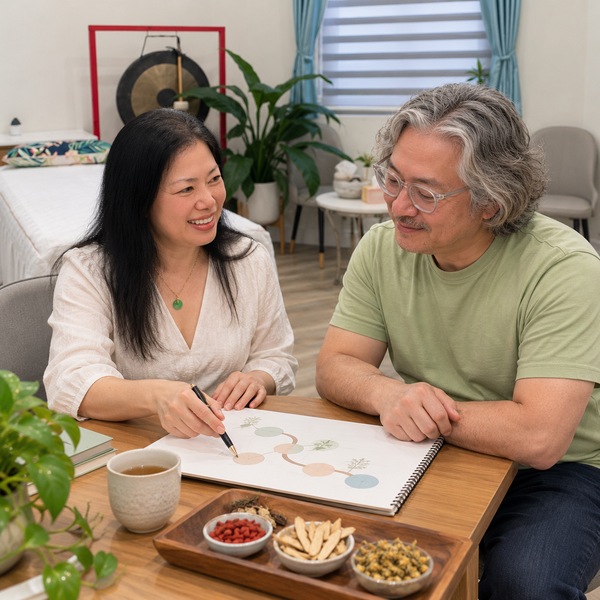
The Lane Cove rooms are at 2 Austin Street, directly opposite the Lane Cove Library and a few metres from Longueville Road. If you are coming from the village it is a walk of two or three minutes, and the parking behind the library is the easiest option in the middle of the day.
Lane Cove sends a particular mix of problems through the door. There are the desk-and-commute necks and low backs from St Leonards and the city, the shoulders and elbows of a suburb that plays a lot of tennis, and the knees and Achilles tendons that come with living on a hillside — the stairs down to Tambourine Bay and the streets off Burns Bay Road are their own kind of training load. Lane Cove also has a lot of people in their thirties and forties carrying small children, which is its own demand on a back.
A first appointment is mostly questions and movement testing: where the pain is, what makes it worse, what it stops you doing, and how it has behaved over weeks rather than days. From there you should leave knowing what is proposed, roughly how long it is expected to take, and what would mean changing the plan.
Worth bringing: any imaging or specialist letters you already have, a list of medications, and the shoes you actually walk or train in. If the pain is new and severe, follows a significant fall, or comes with numbness, weakness, fever or any change in bladder or bowel control, see a doctor first — that is a medical assessment, not a treatment question.
The nearest alternative if Lane Cove does not suit you is the Freshwater side, about 14 kilometres away across the Spit.

Wet cupping combines skin puncture with suction and is not the same as dry cupping. Here is what to discuss, and why it deserves separate agreement before any session.
Wet cupping, sometimes called bloodletting cupping, combines two steps: the skin is punctured, then a cup applies suction over the area. That makes it a different procedure from the dry cupping many people know from sports clubs or gym change rooms, and it deserves a more detailed conversation before it is even placed on the table as an option.
If wet cupping comes up with Dr Christine Shen, Acupuncturist, at the Freshwater clinic, ask her to describe the procedure step by step. Cover:
Mention blood-thinning medicines, diabetes, slow wound healing or skin conditions early, before a date is set. These details can change whether the procedure is appropriate at all.
Saying yes to acupuncture or to dry cupping does not mean you have agreed to a procedure that breaks the skin. You are entitled to consider wet cupping on its own terms, take time to think, and decline without giving a reason. Christine will seek specific agreement for it.
For people with ongoing aches, it helps to name a concrete activity before treatment: turning your head while reversing the car, lifting a shopping bag, or sleeping on one side. At the follow-up, talk about that activity, along with how comfortable the session was and how well the skin settled. A mark on the skin is just one observation and says little on its own.
Whether to repeat the procedure should come back to why it was chosen, how you responded and what else is available. If anything about wet cupping still feels unclear after that discussion, it is perfectly sensible to choose a familiar option and revisit the idea later, or not at all.
Copyright© 2002-2026 visuallink© SaaS - Web Hosted Solutions, Design and Maintenance by Visual Link IT Pty Ltd - Software Solutions

Please Login or Sign up to be able to comment