The Lane Cove rooms are at 2 Austin Street, directly opposite the Lane Cove Library and a few metres from Longueville Road. If you are coming from the village it is a walk of two or three minutes, and the parking behind the library is the easiest option in the middle of the day.
Lane Cove sends a particular mix of problems through the door. There are the desk-and-commute necks and low backs from St Leonards and the city, the shoulders and elbows of a suburb that plays a lot of tennis, and the knees and Achilles tendons that come with living on a hillside — the stairs down to Tambourine Bay and the streets off Burns Bay Road are their own kind of training load. Lane Cove also has a lot of people in their thirties and forties carrying small children, which is its own demand on a back.
A first appointment is mostly questions and movement testing: where the pain is, what makes it worse, what it stops you doing, and how it has behaved over weeks rather than days. From there you should leave knowing what is proposed, roughly how long it is expected to take, and what would mean changing the plan.
Worth bringing: any imaging or specialist letters you already have, a list of medications, and the shoes you actually walk or train in. If the pain is new and severe, follows a significant fall, or comes with numbness, weakness, fever or any change in bladder or bowel control, see a doctor first — that is a medical assessment, not a treatment question.
The nearest alternative if Lane Cove does not suit you is the Freshwater side, about 14 kilometres away across the Spit.

Friends may hand you a long list of foods to avoid once you start herbs. This guide helps you ask which dietary notes genuinely apply to your own formula, and why.
Mention that you have started a herbal formula and someone will usually have a list of foods you should drop. Cold drinks, dairy, spicy dishes, coffee: the warnings travel quickly between friends and relatives. For people trying to stay active through a sore knee or a stiff neck, cutting food groups on hearsay can leave meals thin and energy flat.
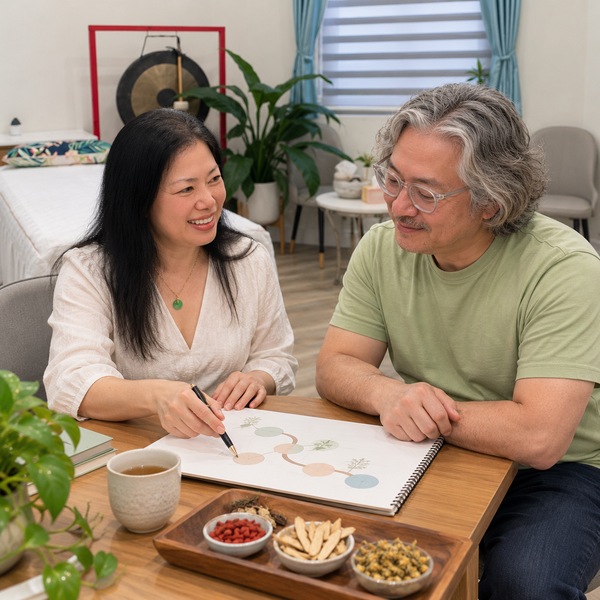
The question worth asking is simple: does a particular food note relate to the formula you were given, and if so, why? When you see Dr Christine Shen, Acupuncturist, at the Freshwater clinic, ask her to separate three kinds of advice:
Christine can only fit dietary notes around your life if she knows what that life looks like. Mention allergies and intolerances, shift work or irregular mealtimes, training sessions, a smaller appetite in older age, or any trouble keeping meals varied and nourishing. If you already follow guidance from a dietitian, GP or diabetes educator, bring it along so herbal suggestions sit alongside that plan rather than against it.
Be wary of removing a long list of foods all at once without a clear reason. Restrictions that are hard to keep tend to be dropped anyway, and unnecessary ones can make it harder to fuel walking, gardening or a return to exercise.
Write down the food notes that do apply and store them with the formula's label, name and dosing directions. If a medicine changes or a new symptom appears and you are unsure whether the herbs are involved, contact Christine rather than altering the dose or experimenting with your diet to find out.
Good eating while on herbs is mostly ordinary good eating, with a few specific notes where they genuinely apply. Ask which ones those are for you, add them to the instruction sheet, and let the rest of the dinner-table folklore pass by politely.
Copyright© 2002-2026 visuallink© SaaS - Web Hosted Solutions, Design and Maintenance by Visual Link IT Pty Ltd - Software Solutions

Please Login or Sign up to be able to comment