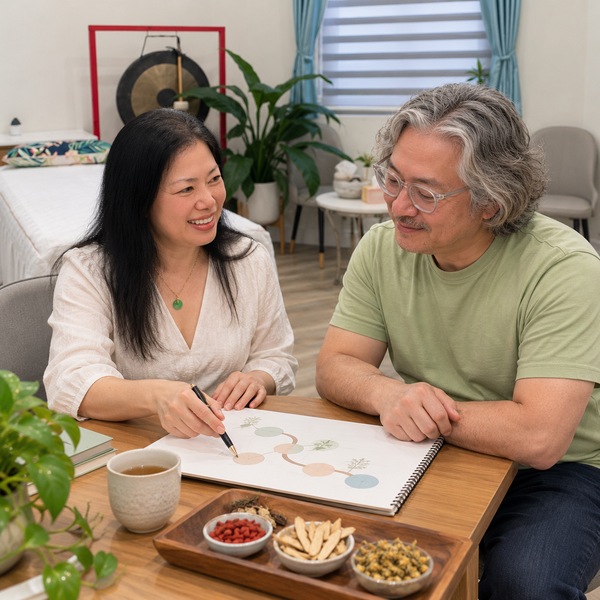
The Lane Cove rooms are at 2 Austin Street, directly opposite the Lane Cove Library and a few metres from Longueville Road. If you are coming from the village it is a walk of two or three minutes, and the parking behind the library is the easiest option in the middle of the day.
Lane Cove sends a particular mix of problems through the door. There are the desk-and-commute necks and low backs from St Leonards and the city, the shoulders and elbows of a suburb that plays a lot of tennis, and the knees and Achilles tendons that come with living on a hillside — the stairs down to Tambourine Bay and the streets off Burns Bay Road are their own kind of training load. Lane Cove also has a lot of people in their thirties and forties carrying small children, which is its own demand on a back.
A first appointment is mostly questions and movement testing: where the pain is, what makes it worse, what it stops you doing, and how it has behaved over weeks rather than days. From there you should leave knowing what is proposed, roughly how long it is expected to take, and what would mean changing the plan.
Worth bringing: any imaging or specialist letters you already have, a list of medications, and the shoes you actually walk or train in. If the pain is new and severe, follows a significant fall, or comes with numbness, weakness, fever or any change in bladder or bowel control, see a doctor first — that is a medical assessment, not a treatment question.
The nearest alternative if Lane Cove does not suit you is the Freshwater side, about 14 kilometres away across the Spit.

A gong, a singing bowl and a handpan create very different listening experiences. Here is how to share your preferences and set up a comfortable, relaxing session.
For someone whose lower back protests after twenty minutes on the floor, a sound session raises practical questions before musical ones. Where will I lie or sit? How loud will it be? Can I move if my hip starts to ache? The instruments differ too: a gong rolls out a wide, layered wash, a single bowl gives a clear sustained note, and a handpan plays something closer to a melody.
Some people find long humming tones soothing; others prefer gentle sounds with plenty of quiet between them. Neither reaction needs a medical reason. Before a session with Dr Christine Shen, Acupuncturist, at the Lane Cove clinic, tell her which sounds you enjoy and which you would rather skip, so the experience can be shaped around you.
It also helps to be clear about what the instruments are for. Sound sessions are offered as a relaxation and wellbeing experience. A gong or handpan in the room does not, simply by being there, produce a health result, and Christine does not present it as care for a medical condition.
Comfort is adjustable. Things you can raise beforehand include:
Nobody expects you to stay motionless. Shifting position, opening your eyes or stretching a stiff shoulder is all fine, and there is no particular feeling you are supposed to have.
If ongoing pain is the reason you are looking for ways to unwind, mention it. A sound session may be a pleasant way to rest, while the pain itself may call for a separate conversation about assessment and other options.
Think of a first session as a chance to discover which sounds, positions and volumes suit you. Note what felt easy and what did not, then share those observations so a later visit can be arranged around the body you bring on the day.
Copyright© 2002-2026 visuallink© SaaS - Web Hosted Solutions, Design and Maintenance by Visual Link IT Pty Ltd - Software Solutions

Please Login or Sign up to be able to comment