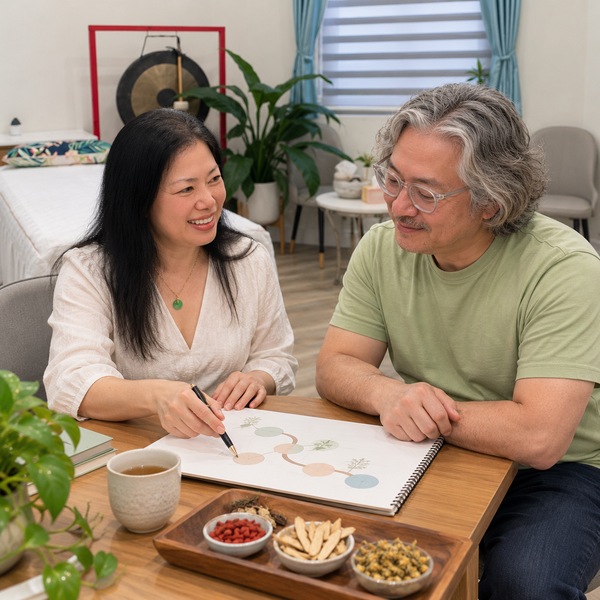
The Lane Cove rooms are at 2 Austin Street, directly opposite the Lane Cove Library and a few metres from Longueville Road. If you are coming from the village it is a walk of two or three minutes, and the parking behind the library is the easiest option in the middle of the day.
Lane Cove sends a particular mix of problems through the door. There are the desk-and-commute necks and low backs from St Leonards and the city, the shoulders and elbows of a suburb that plays a lot of tennis, and the knees and Achilles tendons that come with living on a hillside — the stairs down to Tambourine Bay and the streets off Burns Bay Road are their own kind of training load. Lane Cove also has a lot of people in their thirties and forties carrying small children, which is its own demand on a back.
A first appointment is mostly questions and movement testing: where the pain is, what makes it worse, what it stops you doing, and how it has behaved over weeks rather than days. From there you should leave knowing what is proposed, roughly how long it is expected to take, and what would mean changing the plan.
Worth bringing: any imaging or specialist letters you already have, a list of medications, and the shoes you actually walk or train in. If the pain is new and severe, follows a significant fall, or comes with numbness, weakness, fever or any change in bladder or bowel control, see a doctor first — that is a medical assessment, not a treatment question.
The nearest alternative if Lane Cove does not suit you is the Freshwater side, about 14 kilometres away across the Spit.

Stories of acupuncture lineages bring history to life. Cultural value is meaningful, but whether a treatment suits you today is a separate question.
Stories about acupuncture lineages, where methods have been handed from teacher to student over generations, can make the history of the practice feel close and personal. For people curious about acupuncture for everyday aches, these accounts can be a welcoming introduction to a tradition that has developed over a very long time.

Teaching, documenting and preserving methods helps explain how acupuncture has evolved and why practitioners approach things in particular ways. Many people find that understanding this background adds depth to their experience and respect for the practice.
Cultural value and historical depth, however, are a different matter from whether a specific treatment is suitable for you today. Your current health, medicines, preferences and the reason you are seeking care are what count when deciding on acupuncture for a sore back, stiff neck or aching knees. A respected lineage does not replace an individual assessment.
Use your interest in history as a starting point for conversation with Dr Christine Shen, Acupuncturist. Ask how assessment works in your appointment, how consent is handled and how progress will be reviewed. Ask what she is proposing and why, and what alternatives exist. A clear explanation of the actual approach should stand on its own, regardless of where the methods originated.
Separate the symptom from the result you are hoping for, such as walking further with less discomfort or sitting at your desk with fewer breaks to stretch. Recognising when a GP or physiotherapist should be involved can be valuable too. Ask Christine what would cause her to change direction.
Bringing your interest in acupuncture's history to the Freshwater clinic is a lovely way to start a conversation. From there, the appointment can turn to what will help you move and feel more comfortable now.
Copyright© 2002-2026 visuallink© SaaS - Web Hosted Solutions, Design and Maintenance by Visual Link IT Pty Ltd - Software Solutions

Please Login or Sign up to be able to comment