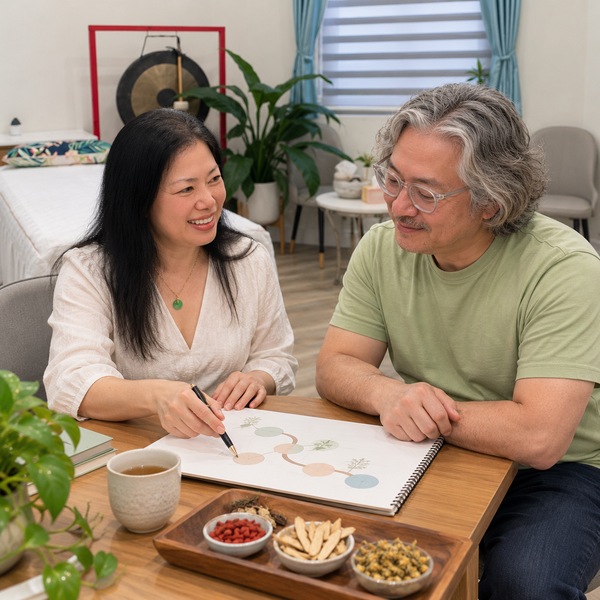
The Lane Cove rooms are at 2 Austin Street, directly opposite the Lane Cove Library and a few metres from Longueville Road. If you are coming from the village it is a walk of two or three minutes, and the parking behind the library is the easiest option in the middle of the day.
Lane Cove sends a particular mix of problems through the door. There are the desk-and-commute necks and low backs from St Leonards and the city, the shoulders and elbows of a suburb that plays a lot of tennis, and the knees and Achilles tendons that come with living on a hillside — the stairs down to Tambourine Bay and the streets off Burns Bay Road are their own kind of training load. Lane Cove also has a lot of people in their thirties and forties carrying small children, which is its own demand on a back.
A first appointment is mostly questions and movement testing: where the pain is, what makes it worse, what it stops you doing, and how it has behaved over weeks rather than days. From there you should leave knowing what is proposed, roughly how long it is expected to take, and what would mean changing the plan.
Worth bringing: any imaging or specialist letters you already have, a list of medications, and the shoes you actually walk or train in. If the pain is new and severe, follows a significant fall, or comes with numbness, weakness, fever or any change in bladder or bowel control, see a doctor first — that is a medical assessment, not a treatment question.
The nearest alternative if Lane Cove does not suit you is the Freshwater side, about 14 kilometres away across the Spit.

Your watch may score your recovery each morning, but heart rate variability depends on context. It is a clue to discuss, not a verdict on treatment.
Read More →
If sore joints have led you to book acupuncture, a handful of plain questions will help you understand the plan before any needles are used.
Read More →
The colour left after gua sha draws attention, but a photo cannot explain your health. Here is why colour needs context, especially if you bruise easily.
Read More →
A little preparation makes a cupping appointment for tight muscles easier to understand, from what to mention beforehand to what to watch afterwards.
Read More →
Articles about pain relief sometimes list bloodletting next to dry cupping. One uses suction on intact skin; the other breaks the skin, and that changes everything.
Read More →
Headlines about instant results from moxibustion are tempting when you are sore and tired. Realistic expectations start with a proper conversation.
Read More →
Wanting psychological support and actually arranging it are two different things, especially when pain saps your energy. Naming the obstacle can help.
Read More →
When long-term pain affects your mood and relationships, choosing psychological support can feel overwhelming. Fit matters more than knowing every theory.
Read More →
When aches keep grabbing your attention, a tone to follow can offer a gentle anchor for mindfulness, presented simply as a relaxation practice.
Read More →
Headlines about herbs and the immune system can read like advice. Most describe early research that cannot tell you what you personally should take.
Read More →