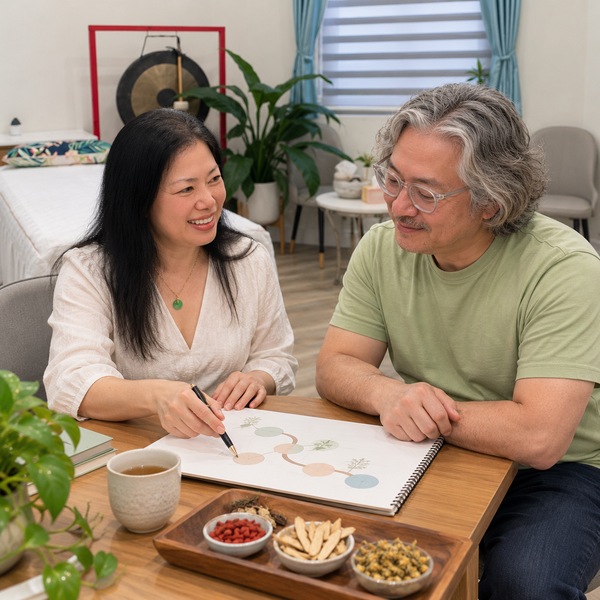
The Lane Cove rooms are at 2 Austin Street, directly opposite the Lane Cove Library and a few metres from Longueville Road. If you are coming from the village it is a walk of two or three minutes, and the parking behind the library is the easiest option in the middle of the day.
Lane Cove sends a particular mix of problems through the door. There are the desk-and-commute necks and low backs from St Leonards and the city, the shoulders and elbows of a suburb that plays a lot of tennis, and the knees and Achilles tendons that come with living on a hillside — the stairs down to Tambourine Bay and the streets off Burns Bay Road are their own kind of training load. Lane Cove also has a lot of people in their thirties and forties carrying small children, which is its own demand on a back.
A first appointment is mostly questions and movement testing: where the pain is, what makes it worse, what it stops you doing, and how it has behaved over weeks rather than days. From there you should leave knowing what is proposed, roughly how long it is expected to take, and what would mean changing the plan.
Worth bringing: any imaging or specialist letters you already have, a list of medications, and the shoes you actually walk or train in. If the pain is new and severe, follows a significant fall, or comes with numbness, weakness, fever or any change in bladder or bowel control, see a doctor first — that is a medical assessment, not a treatment question.
The nearest alternative if Lane Cove does not suit you is the Freshwater side, about 14 kilometres away across the Spit.

Your watch may score your recovery each morning, but heart rate variability depends on context. It is a clue to discuss, not a verdict on treatment.
Many active people and desk workers now wake to a recovery score on their wrist. Heart rate variability, often shortened to HRV, sits behind many of those numbers. It is tempting to treat the score as a report card, especially when you are dealing with sore muscles or a niggling back.
HRV shifts with all sorts of everyday factors: how you slept, how hard you trained the day before, alcohol, stress, illness, even the position you were in when the reading was taken. One result on its own says little. It needs to be read alongside what was happening at the time it was recorded.

If your HRV rises after a session, it does not prove that a treatment has repaired your nervous system or the vagus nerve. Wearables can be interesting, but they were not designed to judge the effect of acupuncture. If you would like to share tracking data with Dr Christine Shen, Acupuncturist, add notes about how you felt and what else was going on. A trend viewed next to your symptoms and daily function tells a fuller story than chasing a perfect number.

A useful plan separates the symptom you notice from the outcome you would value. For a runner, that might be finishing a long run with less hip soreness. For an office worker, sitting through an afternoon without a stiff neck. Understanding the problem better, or recognising when a GP or sports physician should take a look, also counts. Ask Christine how any acupuncture will be reviewed and what would change the approach.
If you track your health closely, a simple weekly summary is easier to discuss than months of raw graphs. Bring it to your appointment at the Lane Cove clinic, along with a few words about sleep, training load and stress, and let the numbers support the conversation rather than lead it.
Copyright© 2002-2026 visuallink© SaaS - Web Hosted Solutions, Design and Maintenance by Visual Link IT Pty Ltd - Software Solutions

Please Login or Sign up to be able to comment