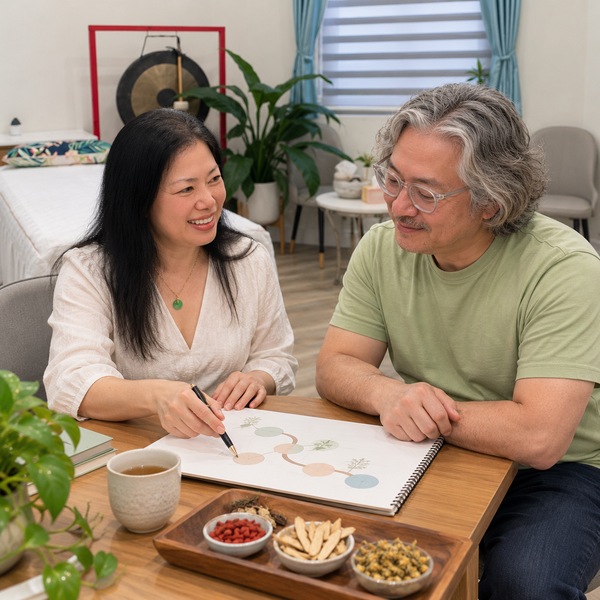
The Lane Cove rooms are at 2 Austin Street, directly opposite the Lane Cove Library and a few metres from Longueville Road. If you are coming from the village it is a walk of two or three minutes, and the parking behind the library is the easiest option in the middle of the day.
Lane Cove sends a particular mix of problems through the door. There are the desk-and-commute necks and low backs from St Leonards and the city, the shoulders and elbows of a suburb that plays a lot of tennis, and the knees and Achilles tendons that come with living on a hillside — the stairs down to Tambourine Bay and the streets off Burns Bay Road are their own kind of training load. Lane Cove also has a lot of people in their thirties and forties carrying small children, which is its own demand on a back.
A first appointment is mostly questions and movement testing: where the pain is, what makes it worse, what it stops you doing, and how it has behaved over weeks rather than days. From there you should leave knowing what is proposed, roughly how long it is expected to take, and what would mean changing the plan.
Worth bringing: any imaging or specialist letters you already have, a list of medications, and the shoes you actually walk or train in. If the pain is new and severe, follows a significant fall, or comes with numbness, weakness, fever or any change in bladder or bowel control, see a doctor first — that is a medical assessment, not a treatment question.
The nearest alternative if Lane Cove does not suit you is the Freshwater side, about 14 kilometres away across the Spit.

Confident slogans can make cupping sound like an answer before anyone has assessed the problem. A useful plan is one you could explain in your own words.
Cupping is sometimes marketed with punchy slogans that promise illness will be drawn out or pain will simply lift away. For someone tired of a sore back or tight calves, that certainty can be reassuring. A headline, though, cannot assess your problem, and its confidence tells you nothing about how cupping will suit you.
An informative account of cupping distinguishes between methods, acknowledges limitations and leaves room for your questions. It treats you as someone making a decision rather than someone being sold a promise.
If you are considering cupping with Dr Christine Shen, Acupuncturist, at the Lane Cove clinic, start by agreeing on its purpose. What is it meant to help with, and how will you both judge whether it is worth continuing? If unfamiliar terms come up, ask what they mean. You might hear about:
Each has its own feel and considerations. Knowing which is planned helps you prepare and speak up if something feels wrong.
A simple check is whether you could describe the plan to a friend in your own words: what will be done, why, and how you will know if it is helping. If you cannot, ask more questions before starting.
Pick an everyday activity before treatment, such as walking the dog without calf tightness or getting through a long drive. At follow-up, talk about that activity, how comfortable the session was and how the skin recovered. How the skin looks is one detail and should not decide the next step.
Slogans are designed to be memorable, not accurate. A plan you understand may be less catchy, but it gives you something far more valuable: the ability to make an informed choice and to change course if cupping does not suit you.
Copyright© 2002-2026 visuallink© SaaS - Web Hosted Solutions, Design and Maintenance by Visual Link IT Pty Ltd - Software Solutions

Please Login or Sign up to be able to comment