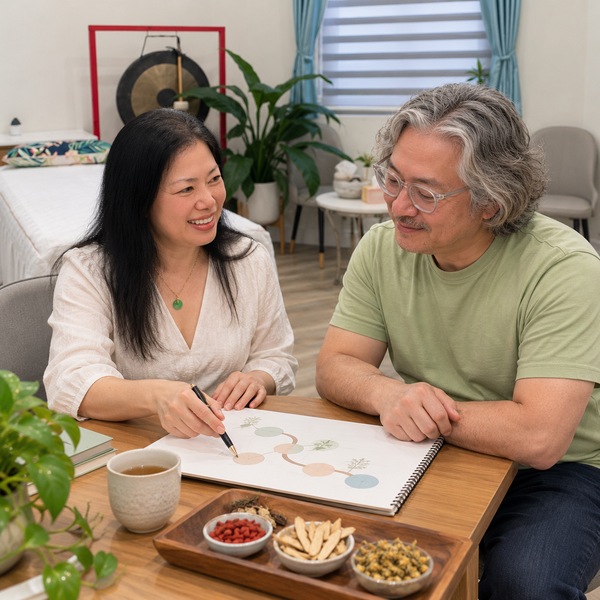
The Lane Cove rooms are at 2 Austin Street, directly opposite the Lane Cove Library and a few metres from Longueville Road. If you are coming from the village it is a walk of two or three minutes, and the parking behind the library is the easiest option in the middle of the day.
Lane Cove sends a particular mix of problems through the door. There are the desk-and-commute necks and low backs from St Leonards and the city, the shoulders and elbows of a suburb that plays a lot of tennis, and the knees and Achilles tendons that come with living on a hillside — the stairs down to Tambourine Bay and the streets off Burns Bay Road are their own kind of training load. Lane Cove also has a lot of people in their thirties and forties carrying small children, which is its own demand on a back.
A first appointment is mostly questions and movement testing: where the pain is, what makes it worse, what it stops you doing, and how it has behaved over weeks rather than days. From there you should leave knowing what is proposed, roughly how long it is expected to take, and what would mean changing the plan.
Worth bringing: any imaging or specialist letters you already have, a list of medications, and the shoes you actually walk or train in. If the pain is new and severe, follows a significant fall, or comes with numbness, weakness, fever or any change in bladder or bowel control, see a doctor first — that is a medical assessment, not a treatment question.
The nearest alternative if Lane Cove does not suit you is the Freshwater side, about 14 kilometres away across the Spit.

Shanghai-style herbal pastes carry a distinctive cultural history and preparation craft. Learning about them is engaging, but suitability still comes down to you.
In Shanghai and surrounding regions, herbal pastes have a distinctive place in cultural life, with traditions around slow cooking, careful selection of ingredients and the timing of preparation each year. Videos and articles about the craft can be fascinating, and some readers feel inspired to try a paste themselves to see them through a winter of stiff joints or tiredness.
Learning how a paste is made tells you about skill and heritage. It does not establish that a particular product suits every reader. Ingredients vary, preparation methods vary, and so do people. What works within one tradition or for one person is not automatically right for someone else with a different health history.
If you raise the idea of a paste with Dr Christine Shen, Acupuncturist, at the Lane Cove clinic, the conversation will centre on your circumstances rather than reproducing a recipe from overseas. Helpful questions include:
A good consultation links your cultural interest with a practical decision, including the option of not using a paste.
Keep the label, directions and review plan with the jar. Let Christine know about any changes to medicines prescribed elsewhere. If you feel unwell or notice a new symptom, contact the clinic before altering how much you take.
Interest in the artistry of Shanghai-style pastes is something to enjoy. You can admire the tradition, ask questions about it and still make a measured choice for your own body, one shaped by assessment rather than by how beautifully a paste was made.
Copyright© 2002-2026 visuallink© SaaS - Web Hosted Solutions, Design and Maintenance by Visual Link IT Pty Ltd - Software Solutions

Please Login or Sign up to be able to comment