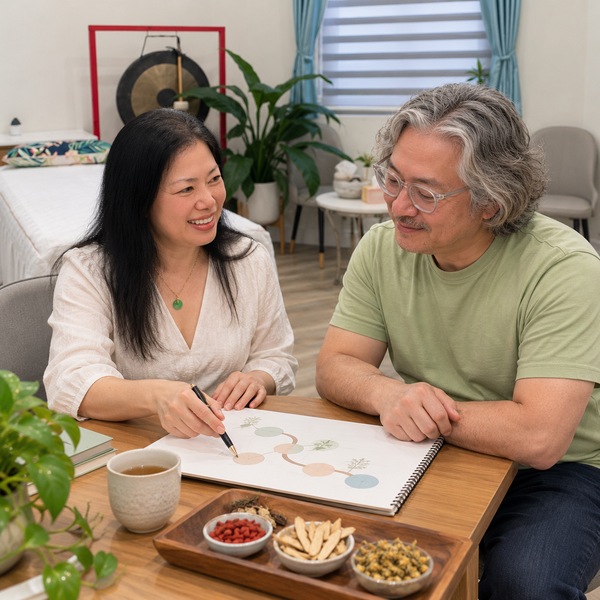
The Lane Cove rooms are at 2 Austin Street, directly opposite the Lane Cove Library and a few metres from Longueville Road. If you are coming from the village it is a walk of two or three minutes, and the parking behind the library is the easiest option in the middle of the day.
Lane Cove sends a particular mix of problems through the door. There are the desk-and-commute necks and low backs from St Leonards and the city, the shoulders and elbows of a suburb that plays a lot of tennis, and the knees and Achilles tendons that come with living on a hillside — the stairs down to Tambourine Bay and the streets off Burns Bay Road are their own kind of training load. Lane Cove also has a lot of people in their thirties and forties carrying small children, which is its own demand on a back.
A first appointment is mostly questions and movement testing: where the pain is, what makes it worse, what it stops you doing, and how it has behaved over weeks rather than days. From there you should leave knowing what is proposed, roughly how long it is expected to take, and what would mean changing the plan.
Worth bringing: any imaging or specialist letters you already have, a list of medications, and the shoes you actually walk or train in. If the pain is new and severe, follows a significant fall, or comes with numbness, weakness, fever or any change in bladder or bowel control, see a doctor first — that is a medical assessment, not a treatment question.
The nearest alternative if Lane Cove does not suit you is the Freshwater side, about 14 kilometres away across the Spit.

A single case study about cupping and fatigue can be interesting, but it cannot forecast your result. Ongoing tiredness deserves proper investigation.
Fatigue often travels with pain. Aches can disturb sleep, poor sleep can heighten aches, and the cycle can leave you drained. So when you read a case study describing someone who felt less tired after a series of cupping sessions, it is understandable to feel hopeful.
A case study can describe a meaningful experience for one person. It cannot predict what will happen for someone else. Often, several things change at once: new treatments, more rest, different exercise, time off work. When that happens, there is no way to tell which element made the difference. A case study also cannot provide a reliable number of sessions for anyone else.
Ongoing tiredness can have many causes, including anaemia, thyroid problems, sleep disorders, depression, medicines and other conditions. If fatigue is affecting your life, talk about its timing, severity and impact with your GP and with Dr Christine Shen, Acupuncturist. Some causes need investigation, and that should happen before or alongside any complementary care.
A realistic goal is more useful than the hope of copying someone else's story. You might choose to notice whether you can get through an afternoon at work with less soreness, or manage a short walk more comfortably. Agree with Christine on how that goal will be reviewed.
At follow-up, consider your chosen goal, how comfortable cupping felt and how your skin recovered. Visible marks are only one observation. The decision to continue should depend on your purpose, your response and the alternatives, including any medical findings.
A simple energy and sleep log kept for a fortnight before visiting the Freshwater clinic can give you and Christine a clearer starting point than memory alone, and it is useful to share with your doctor too.
Copyright© 2002-2026 visuallink© SaaS - Web Hosted Solutions, Design and Maintenance by Visual Link IT Pty Ltd - Software Solutions

Please Login or Sign up to be able to comment